 Frenchy Coffee
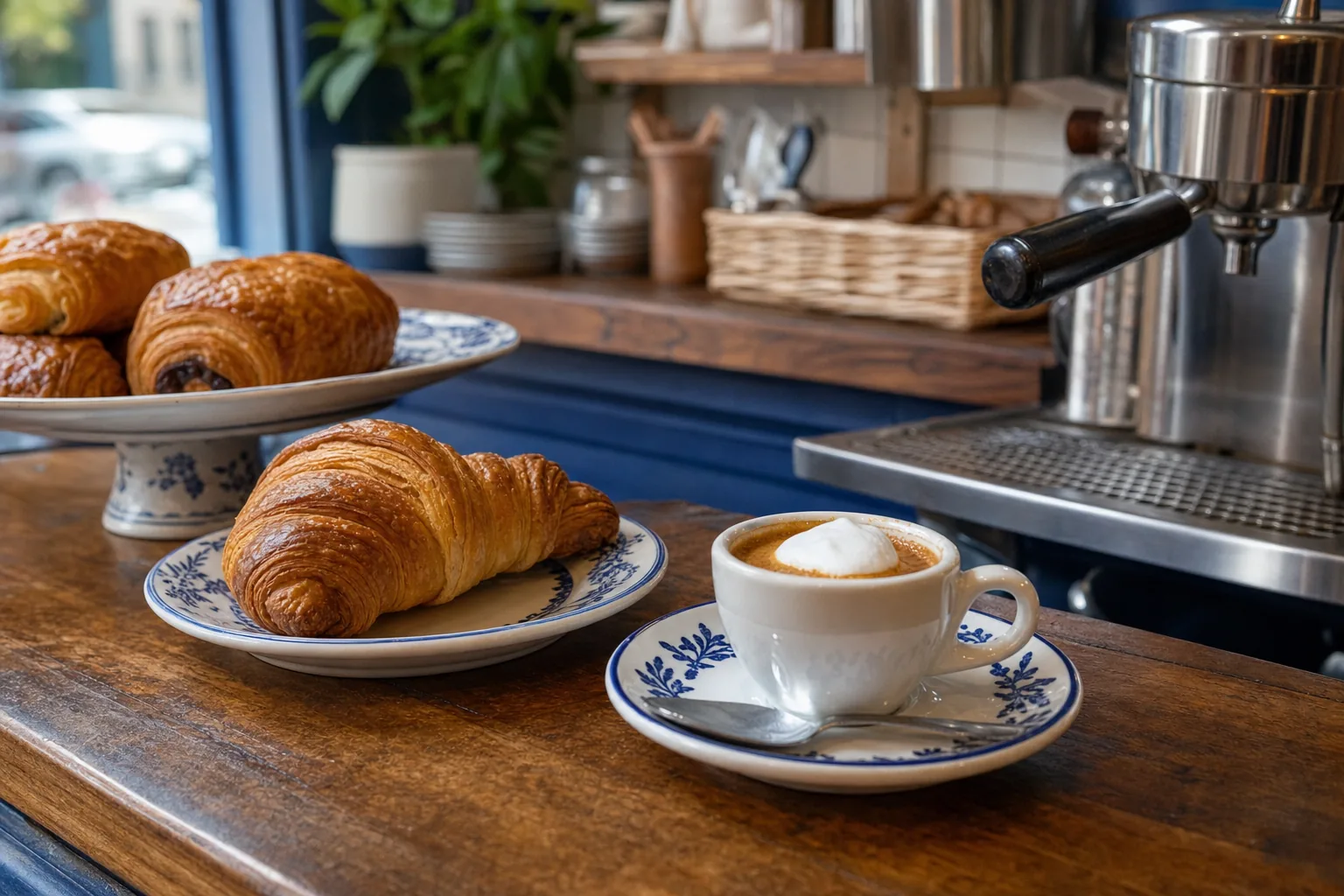
When you’re choosing between a macchiato and a latte, the main difference is the milk. A traditional macchiato is espresso marked with a small amount of foam; a latte blends espresso with much more steamed milk. That changes the size, texture, and strength of the coffee flavor, even when the drinks use the same number of shots.
Macchiato: Espresso Marked With Foamed Milk
A traditional espresso macchiato is espresso with a small spoonful of steamed milk or foam on top. The Italian word macchiato means “marked” or “stained,” a good fit for the pale mark against the dark espresso.
The espresso goes into the cup first. The barista adds the milk after, so the foam sits on the shot instead of filling a large cup. Some cafés use one shot; others use two. Recipes vary, so it’s worth asking how a café makes its version if you want a specific strength or size.
The result is small and coffee-forward. A little milk rounds off some of espresso’s sharp edge, but it doesn’t cover the coffee’s taste. You’ll notice the espresso first, then the softer, creamy feel of the foam. That contrast is the point.
Macchiato can mean something else on a U.S. menu. A latte macchiato starts with steamed milk, then espresso is poured over it. That reversed order makes a taller, milkier drink with visible layers, unlike the small espresso macchiato described here. A sweet, flavored chain-style macchiato may also be closer in size and feel to a latte.
At Frenchy Coffee NYC, our drink menu lists a macchiato for $3.75. We’re at 129 East 102nd Street in East Harlem, so you can ask at the counter how the drink is prepared if you have a particular milk or shot preference.
Latte: Espresso With More Steamed Milk
A latte pairs espresso with a larger amount of steamed milk, usually finished with a thin layer of foam. Unlike a traditional macchiato, the milk is part of nearly every sip. It makes the drink smoother, creamier, and less intense in flavor.
The usual build starts with espresso in a cup. The barista steams milk until it’s smooth and lightly foamy, then pours it into the espresso. Fine bubbles, often called microfoam, help the milk blend into the coffee instead of sitting in a thick, separate cap. A skilled pour can make a pattern on top, but latte art is decoration, not a different recipe.
Latte size depends on the café. A latte combines espresso with steamed milk and is often served in a larger cup or glass than a cappuccino. In everyday U.S. cafés, a latte is commonly served as a longer drink than an espresso macchiato. Still, there’s no single cup size or shot count every café follows.
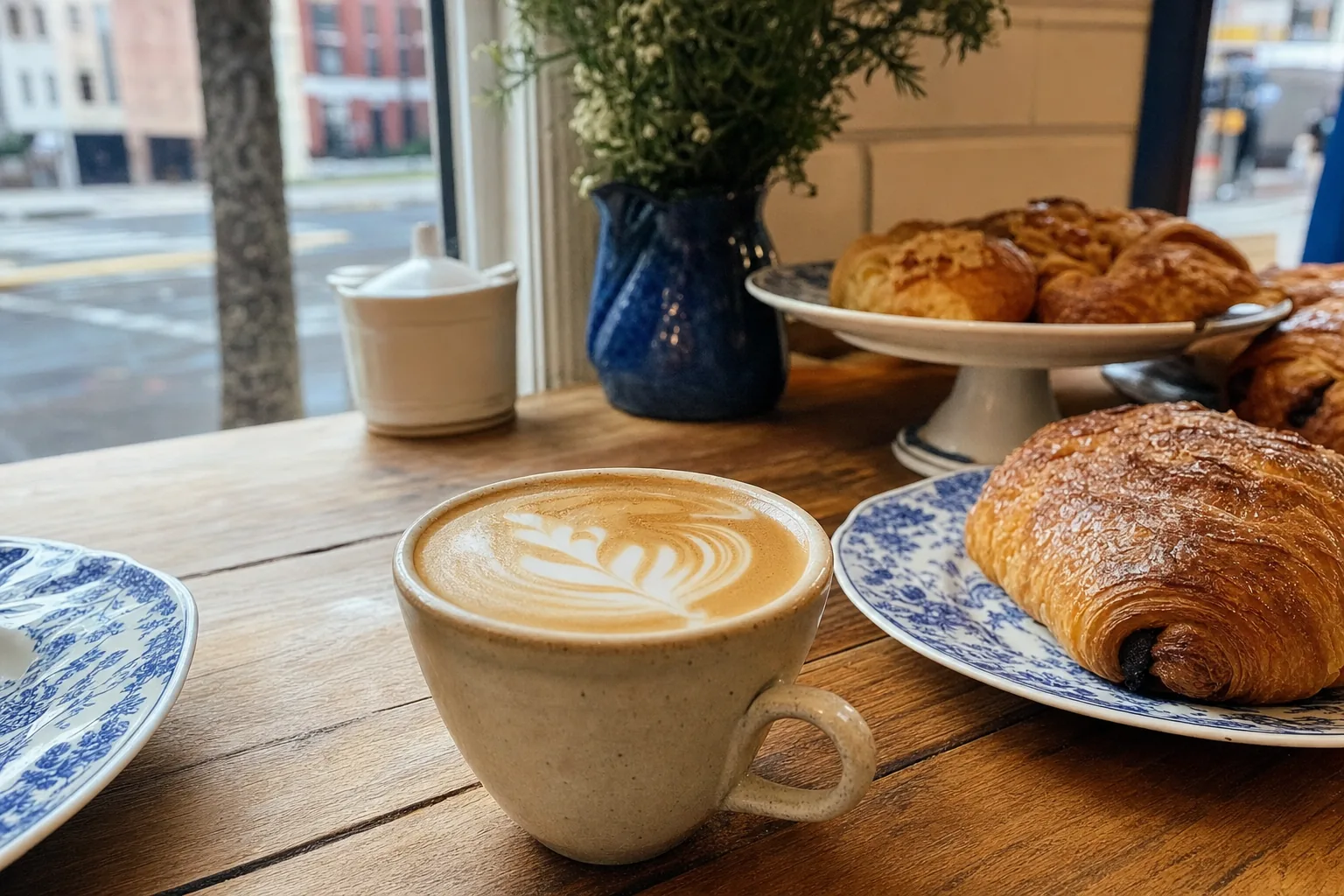
Since the milk takes up more of the drink, a latte gives espresso a gentler role. The warm milk brings its own mild sweetness, even without added syrup. That’s why a latte can taste soft and round next to a macchiato made with the same espresso.
Order a latte when you want a slower, milkier drink. If you’d like a sharper coffee taste, ask about the shot count or choose the smaller macchiato style instead. Keep in mind that the word “macchiato” alone may not tell you which recipe a café uses.
The latte’s milk also changes how it feels in the hand. It’s usually served in a cup or glass with room for steamed milk, while a traditional macchiato fits a small espresso cup. You don’t need to know the exact volume to spot the difference: one is built around milk, the other around espresso.
Milk, Texture, and Serving Size Side by Side
Milk amount is the clearest way to compare the two drinks. A macchiato uses a small topping of milk or foam, while a latte has enough steamed milk to change the whole cup. Exact ratios and serving sizes differ by café, so treat the contrast as a guide rather than a fixed rule.
| What to compare | Macchiato | Latte |
|---|---|---|
| Main balance | Espresso first, with a small milk mark | Espresso mixed with more steamed milk |
| Milk texture | A small spoonful of foam or steamed milk | Smooth steamed milk with a light foam layer |
| Typical feel | Small, direct, and espresso-forward | Creamy, gentle, and milk-forward |
| Common cup | Small espresso cup | Larger cup or glass |
| Best fit | You want the coffee taste to lead | You want a softer, longer drink |
In a macchiato, foam often stays near the top as a distinct cap. That gives the first sip a soft texture before the espresso comes through. A latte’s steamed milk is poured into the coffee, so the drink feels more even from top to bottom.
Milk steaming matters, too. A latte needs milk with small bubbles and a smooth pour. If the foam is coarse or sits in a thick layer, the drink may feel more like separate milk and coffee than one blended cup. A macchiato needs far less milk, so the foam is more of a small accent than a full texture base.
Glassware helps set expectations. A demitasse or espresso cup suits a traditional macchiato because there’s little milk to add. A latte can come in a larger cup or glass, with room for the milk and a thin layer of foam. A clear glass can show the layers in a latte macchiato, but that’s a different build from a regular latte.
If both drinks have the same number of espresso shots, their caffeine can be similar. The latte feels milder because the espresso is spread through more milk, not because milk removes caffeine. If caffeine is your main concern, ask about the shot count instead of judging by cup size alone.
For a drink between these two, a cortado uses a closer balance of espresso and warm milk. Our cortado explanation covers how that smaller, more even mix differs from both a macchiato and a latte.
Flavor and Caffeine: What Changes and What Does Not
A macchiato usually tastes stronger because less milk sits between you and the espresso. The coffee’s roast notes, acidity, and bitterness come through more clearly. The milk adds a softer edge, but it doesn’t turn the drink into a creamy cup.
A latte tastes gentler and often seems sweeter, even when it has no syrup. That sweetness comes from the milk’s own taste. Its texture also spreads the espresso across more liquid, so each sip feels less concentrated.
“Stronger” can mean two things: stronger coffee flavor or more caffeine. The macchiato often wins on flavor intensity. But if both drinks use the same number of espresso shots, the shot count, rather than the milk volume, is the main factor in their caffeine. Ask the barista if you want to know how many shots are in the cup.
That distinction matters when you order. Someone who says they want “less strong coffee” may mean a milder taste, not necessarily less caffeine. A latte can taste milder while using the same espresso base. Someone who wants less caffeine should ask about a smaller shot count or a decaf option, if the café serves one.
There’s also a naming snag. A traditional espresso macchiato is espresso marked with milk. A latte macchiato reverses the order: milk first, then espresso. Some sweet, layered macchiatos sold in the U.S. use milk and flavoring as the main part of the drink. If you want the small traditional version, say “espresso macchiato.”
Neither drink has one fixed recipe everywhere. One café may use a single espresso shot in both drinks, while another may use a different amount. Milk type and cup size can shift the taste as well. So the fairest comparison is to ask the same café how it makes each drink, then compare the milk balance and shot count.
If you enjoy a milk drink but want the espresso to stay more present, you can ask whether the café can make the latte with less milk. If you prefer a softer taste, the regular latte is the simpler order. A flavored version changes the taste further, so start with the plain drink if you want to compare espresso and milk.
Customizations and Pastry Pairings in a NYC Café
Customizing a macchiato is mostly about keeping the espresso at the center. You can ask how many shots it includes, or whether the milk is steamed or spooned foam. Since the drink is small, even a modest change in milk can shift its balance.
A latte gives you more room for a change in texture or flavor. The milk already softens the espresso, so an added flavor can become a clear part of the cup. If you’re comparing drinks for the first time, try them plain before adding syrup. That makes the difference in milk and coffee easier to taste.
Milk options vary by café. Ask what’s available rather than assuming every shop has the same choices. The same goes for decaf. If you want to limit caffeine, ask whether decaf espresso is an option and whether the drink’s shot count can be adjusted.
Food can change how each drink lands, too. A small macchiato works well beside a sweet pastry when you want a short, coffee-forward sip between bites. A latte can be a comfortable match for a pastry or savory bake when you want a longer drink with a softer taste. Those are taste pairings, not strict rules. Try the combination you like.
At Frenchy Coffee NYC, our pastries and savory bakes are made in the café. If you’re having a macchiato with something sweet, the espresso’s sharper taste can balance the pastry’s sweetness. If you choose a latte, the milk and pastry may feel like a gentler, more filling pairing. The right match depends on the pastry and how sweet you like your coffee.
We’re a family-owned French café and bakery in East Harlem, and our founders come from Évian-les-Bains in the French Alps. If you’re near East 102nd Street, you can stop in for the macchiato on our menu. It’s $3.75. Ask us at the counter about the preparation if you want a particular balance.
For another milk-and-coffee comparison, our café au lait vs. latte breakdown explains how brewed coffee changes the cup compared with espresso.
When to Choose a Macchiato or a Latte in East Harlem
Choose a macchiato when you want espresso to take the lead. It’s a compact drink, so the coffee stays present from the first sip. It can suit a quick café stop or a moment when you want a small coffee without much milk.
Choose a latte when you want a softer drink that takes longer to sip. The steamed milk makes the espresso taste less sharp and gives the cup a smooth, creamy feel. It’s also the more natural choice if you like milk in most of your coffee.
Think about what you want to notice. If the espresso’s flavor is the main draw, start with a traditional macchiato. If you want coffee with a milky texture, go for a latte. If neither sounds quite right, a smaller drink with a more even coffee-and-milk balance may fit better. The cappuccino and latte comparison can help you judge another milk texture without changing the espresso base.
In East Harlem, the name on the menu may not tell the whole story. A “macchiato” could mean a small espresso with foam or a larger, milk-forward drink. Ask for an espresso macchiato if you want the traditional small cup. If you’d rather have a latte, say so directly and ask about the size or shot count if those details matter to you.
At Frenchy Coffee NYC, you can find a macchiato on our espresso menu at 129 East 102nd Street. Our hours are Monday through Friday, 7 am to 5 pm, and Saturday and Sunday, 8 am to 4 pm. We’re a neighborhood café stop for people in East Harlem and nearby parts of Manhattan.
There isn’t a universal winner. The macchiato keeps espresso close to the front; the latte gives milk more say. Pick based on the flavor you want today, not on which drink sounds more “authentic.”
Macchiato vs Latte FAQ
Is a macchiato stronger than a latte?
A macchiato usually tastes stronger because it has much less milk than a latte. That keeps the espresso more noticeable in each sip. But “stronger” can also mean more caffeine. If both drinks use the same number of espresso shots, their caffeine can be similar, so ask about shot count if that’s what you mean.
Does a macchiato have more caffeine than a latte?
Not necessarily. Caffeine depends mainly on the espresso shots, not how much milk is in the cup. A macchiato and a latte made with the same number of shots can have similar caffeine, even though the macchiato tastes more concentrated. Ask the café how many shots go into each drink.
What’s the difference between a macchiato and a latte macchiato?
A traditional macchiato starts with espresso, then adds a small amount of milk or foam. A latte macchiato starts with steamed milk, then adds espresso. That reversed order makes the latte macchiato larger and milkier, often with visible layers in a glass.
Which drink has more milk, a macchiato or a latte?
A latte has more milk. Steamed milk is a major part of its volume and texture, while a traditional macchiato uses only a small spoonful of milk or foam. The exact amount varies by café, but the latte is the milk-forward option.
How do I order a traditional macchiato at a U.S. café?
Ask for an “espresso macchiato” if you want espresso marked with a little milk or foam. The word “macchiato” can also refer to a larger, milkier drink on some U.S. menus. Asking for the espresso version helps the barista understand that you want the small, coffee-forward style.
Conclusion
Pick a macchiato for a small cup where espresso leads, or a latte for a smoother, milkier drink. If you’re in East Harlem, stop by Frenchy Coffee NYC at 129 East 102nd Street and ask us about the macchiato on our menu.