 Frenchy Coffee
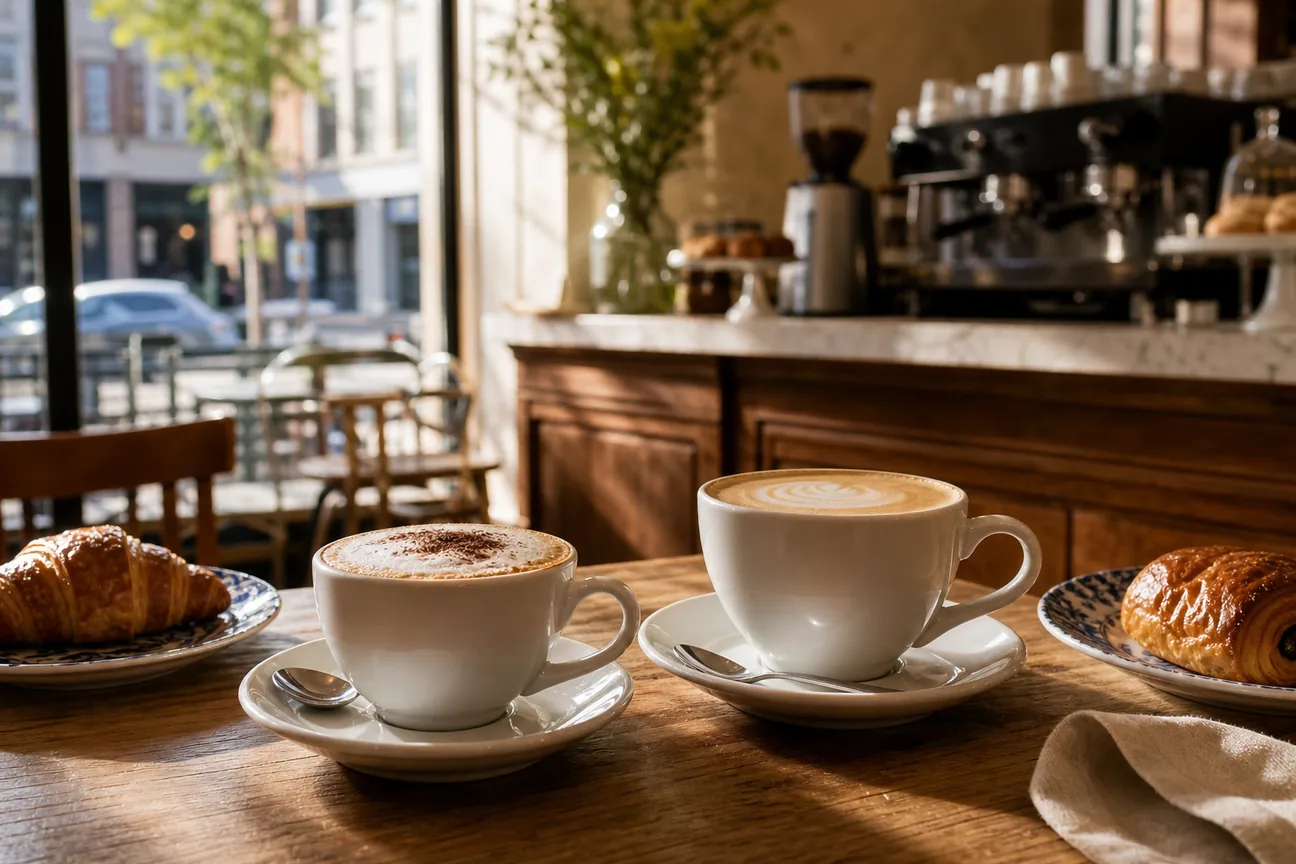
Choosing between a cappuccino and a latte comes down to one big difference: the way milk fills the cup. In the cappuccino vs latte debate, a cappuccino is smaller and foamier, while a latte is milkier and smoother. Here’s how that changes the taste, texture, and size of your order.
1. Cappuccino: A Smaller Drink with More Foam
A cappuccino pairs espresso with steamed milk and a thick layer of milk foam. It’s usually served in a smaller cup than a latte, so the coffee stays noticeable even with milk in the mix.

The foam changes the first sip. It feels airy and soft, then gives way to warm milk and espresso underneath. If you like a distinct coffee taste and want a drink with a clear foam cap, a cappuccino is a good fit.
In Vienna, an older coffee drink appeared on coffeehouse menus around the late 1700s. The modern cappuccino developed later, as espresso machines and steamed milk became part of café life.
Baristas make cappuccino foam by adding more air to the milk as it steams. The milk becomes thicker and more structured than the silky microfoam used for a latte. The exact recipe varies by café, so one cappuccino may have a firmer foam top than another.
In Manhattan, cappuccinos are a familiar café order, but the name alone doesn’t tell you how much espresso is in the cup. If caffeine matters to you, ask how many shots the recipe uses. A thick foam cap can make a drink taste bold, but perceived strength and caffeine are different things.
Choose a cappuccino when you want less liquid milk and more foam texture. It’s also a useful choice when you’d rather taste espresso than have it softened by a larger pour of milk.
2. Latte: More Steamed Milk and a Creamier Sip
A latte combines espresso with a larger amount of steamed milk and a thin layer of foam. That extra milk softens the espresso’s edge, giving the drink a smooth, creamy feel and a milder coffee taste.
Latte milk is steamed with less air than cappuccino milk. The goal is fine, glossy microfoam blended through the milk, rather than a thick cap sitting on top. Because the milk can flow in a smooth stream, a barista can pour a pattern into the surface.
The name comes from the Italian caffè latte, or coffee with milk. The espresso-based café latte took shape with the spread of espresso machines and steam wands.
A latte suits a longer, softer coffee break. It’s also a good match if espresso tastes too sharp on its own, or if you enjoy milk as a key part of the drink. The same espresso can seem less intense when spread through more steamed milk.
Latte and café au lait sound close, but they start with different coffee. A latte uses espresso. Café au lait pairs brewed coffee with milk. If you’re deciding between those two, see our related article.
At Frenchy Coffee NYC, our espresso menu sits within a French café and bakery in East Harlem. Our cappuccino and latte both start at $4.65, and a seasonal special rotates on the chalkboard behind the counter, so ask what’s on the board when you visit.
3. Espresso, Milk, and Foam: How the Proportions Compare
Both drinks start with espresso and steamed milk. The main difference is how much of the finished cup comes from liquid milk and how much comes from foam. Cappuccinos lean toward foam; lattes lean toward steamed milk.

Many descriptions use a rough thirds model for a cappuccino: espresso, steamed milk, and foam. Treat that as a guide, not a fixed rule. A latte has a higher share of steamed milk and a much thinner layer of foam. Cafés may adjust both recipes to fit their cup and style.
| What to compare | Cappuccino | Latte |
|---|---|---|
| Espresso | Forms a larger share of the smaller drink | Blends into a larger pour of milk |
| Steamed milk | Less liquid milk in the cup | More steamed milk |
| Foam | Thick, airy layer | Thin, fine microfoam |
| Texture | Light on top, with a distinct foam feel | Smooth and creamy throughout |
| Common serving | Often about 5 to 6 ounces | Often larger, around 8 ounces or more |
| Good fit when | You want foam and a more direct espresso taste | You want more milk and a gentler coffee taste |
Milk texture comes from how the barista steams it. For a cappuccino, the wand draws in more air, building a thicker foam. For a latte, the barista adds less air, then works the milk into fine bubbles that pour easily. The milk is warmed in both cases, but the finish in the cup is different.
These drinks aren’t the only ways to pair espresso with milk. A cortado uses a closer balance of espresso and warm milk, with little foam.
For caffeine, compare the espresso shots, not the drink names. A larger latte doesn’t automatically have more caffeine, and a cappuccino isn’t automatically stronger in caffeine. If both drinks use the same espresso and shot count, the milk ratio changes their taste more than their caffeine.
4. Flavor and Texture: Which Drink Tastes More Like Espresso?
A cappuccino usually tastes more like espresso because it has less liquid milk relative to the coffee. The foam adds an airy feel, while the coffee remains clear beneath it. A latte usually tastes milder because more steamed milk rounds out the espresso.
That doesn’t mean every cappuccino tastes strong or every latte tastes weak. Espresso roast, extraction, cup size, and shot count all affect the result. Still, if the same café uses the same espresso in both drinks, the extra milk in a latte will usually make the coffee taste gentler.
Texture matters as much as flavor. Cappuccino foam is easy to notice before the coffee reaches your tongue. Latte microfoam is finer and blends into the drink, so each sip feels more uniform. Think of one as a drink with a soft foam layer and the other as a creamy coffee with a light surface.
This difference also shapes latte art. Fine, pourable microfoam lets a barista form a pattern on the surface. Thick cappuccino foam has a different feel and doesn’t pour the same way. Latte art can be a nice detail, but it doesn’t tell you how much espresso is in the cup.
Milk can shift the taste and texture, too. The choice of milk affects how the drink feels, and plant-based options can foam differently from dairy. Ask the café what it can make if you have a preferred milk. Don’t assume every shop uses the same milk or steams it the same way.
For a quick decision, choose the cappuccino when you want to notice the espresso and feel the foam. Choose the latte when you want milk to soften the coffee and make the sip smoother. Neither is inherently stronger in caffeine; the recipe determines that.
5. Cup Size and Ordering: What to Expect at an NYC Café
A cappuccino is commonly served in a small cup, often around 5 to 6 ounces. A latte is usually larger because it holds more steamed milk. These are common patterns, not strict rules. Cafés may use different cup sizes, and a large-chain cappuccino can be much bigger than the traditional version.
In New York City, ordering by name won’t always tell you the final size or shot count. If you want a compact drink, ask what size the cappuccino is. If you want a longer drink, ask how much milk goes into the latte. That small question helps you avoid ordering a cup that’s much bigger or milder than you expected.
Also ask about espresso shots if you’re comparing caffeine or coffee intensity. A larger cup can hold more milk without holding more espresso. Conversely, a café might use a different shot recipe for a larger drink. The menu name alone can’t settle that.
At Frenchy Coffee NYC, we’re at 129 East 102nd Street in East Harlem, near the 6 train at 103rd Street. We serve espresso drinks in a neighborhood café setting. For current hours and directions, check the Frenchy Coffee NYC East Harlem page.
Milk substitutions can change the final texture. A non-dairy milk may foam or pour differently from the milk a café uses by default. If you have a specific preference, ask before ordering so the barista can tell you what’s available and how it works in that drink.
6. Which Is Better for You: Cappuccino or Latte?
Neither drink wins for everyone. The better choice depends on the taste and texture you want, plus the size of the break you have in mind.
Choose a cappuccino if you want
- A smaller drink with a noticeable layer of foam.
- Espresso flavor that stands out from the milk.
- A lighter, airier feel at the top of each sip.
Choose a latte if you want
- A larger drink with more steamed milk.
- A smooth, creamy texture and a softer coffee taste.
- Fine microfoam that can carry a poured pattern.
If you’re new to espresso, a latte can feel gentler. If you already enjoy espresso and want milk without losing as much coffee flavor, try a cappuccino. But if caffeine is the key factor, ask about shots rather than guessing from the drink name.
Sweetness is another point to consider. Steamed milk can taste naturally sweet, but neither drink has to include syrup. Added flavors change the drink, so ask what’s included if you want to keep the order simple.
If you want something beyond the standard milk-and-foam split, Frenchy Coffee NYC also pours cold brew that regulars order with vanilla sweet cream cold foam, plus a seasonal drink that changes every season. Both are on our drink menu.
For most café orders, keep the choice simple: foam-forward and compact points to cappuccino; milkier and smoother points to latte. Then ask about the cup size or shot count if either could change your decision.
Frequently Asked Questions
Is a cappuccino stronger than a latte?
A cappuccino often tastes more coffee-forward because it has less steamed milk compared with the espresso. That doesn’t mean it always has more caffeine. Caffeine depends on the espresso recipe and shot count. If you’re choosing based on caffeine, ask how many shots are in each size rather than relying on the drink name.
Which has more milk, a cappuccino or a latte?
A latte usually has more steamed milk. A cappuccino uses more foam relative to its size, while a latte has a thinner foam layer over a larger amount of milk. Café recipes vary, so ask about the serving size if you want to know how milk-heavy a specific drink will be.
Can I order a cappuccino or latte with plant-based milk?
Often, yes, but the options depend on the café. Plant-based milks can steam and foam differently from dairy, which may change the texture of either drink. Ask what milk is available before ordering, especially if you want a cappuccino’s thicker foam or a latte’s fine, pourable microfoam.
Does a latte always have more caffeine because it’s bigger?
No. A bigger cup can contain more milk without containing more espresso. The caffeine depends mainly on the number of shots and the coffee used. If a latte and cappuccino have the same espresso and shot count, their caffeine can be similar even though the latte tastes milder.
What’s the easiest way to choose between them?
Choose a cappuccino if you want a smaller drink with more foam and a clearer espresso taste. Choose a latte if you want more steamed milk and a smoother sip. If neither sounds right, ask the barista to describe the cup size and shot count before you order.
Conclusion
Pick a cappuccino for a compact, foam-forward drink, or a latte for more milk and a creamier sip. If you’re in East Harlem, stop by Frenchy Coffee NYC at 129 East 102nd Street and ask what seasonal drink is on the board.