 Frenchy Coffee
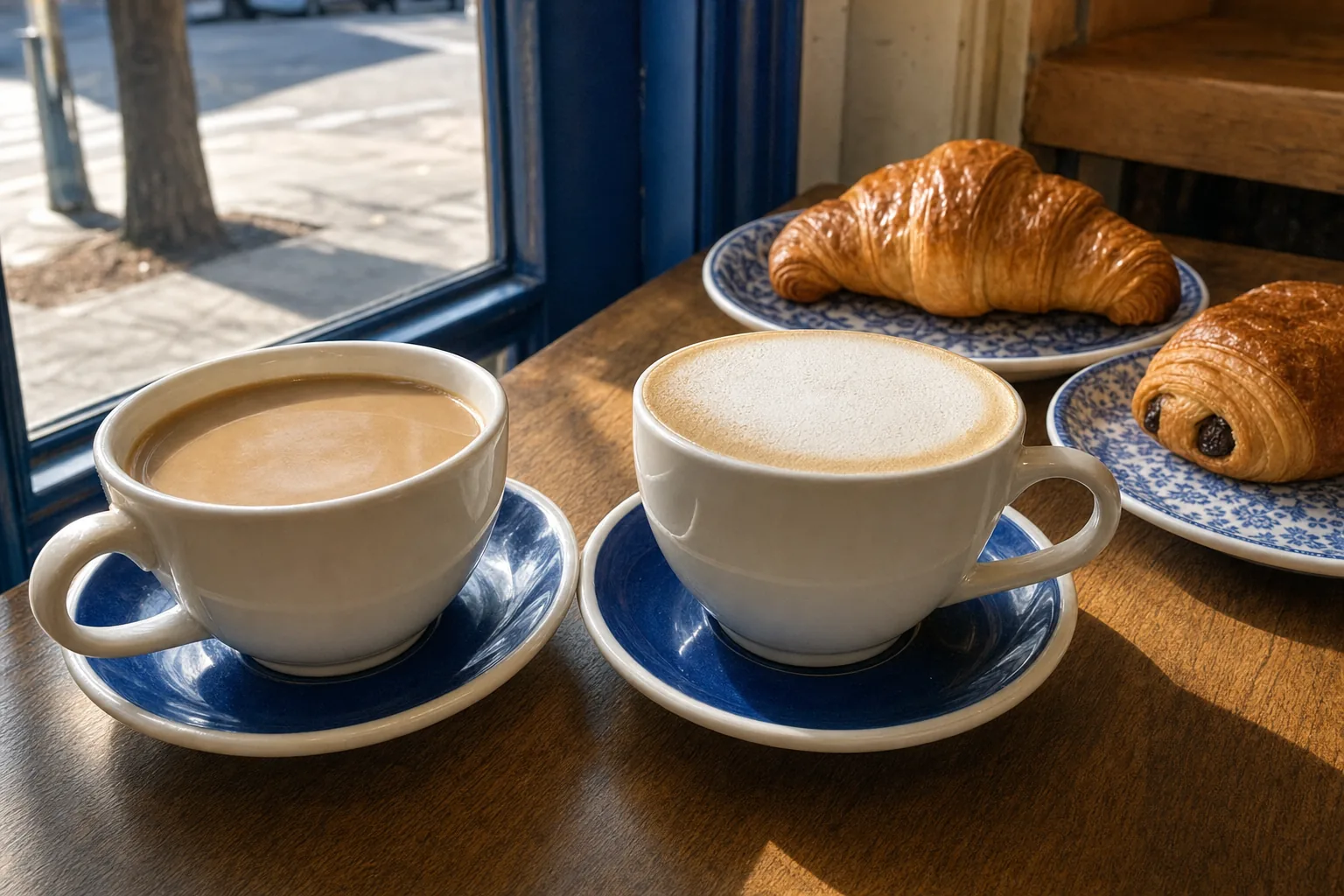
Café au lait vs latte comes down first to the coffee: one usually starts with brewed coffee, the other with espresso. That choice changes the milk balance, texture and feel of the drink, so the right order depends on what you want in your cup.
We analyzed 6 pages (English-language Google results) about café au lait vs latte and found that 0 of 6 give a dollar price for either drink or tell readers to ask which coffee base a café uses. Only 1 of 6 mentions iced versions.
Coffee base and milk ratio: the defining difference
A café au lait pairs brewed coffee with hot or steamed milk. A latte starts with espresso, then adds steamed milk. Both are coffee with milk, but the base changes how the milk fits into the drink.
The usual café au lait balance is close to equal parts coffee and milk. The brewed coffee fills a larger share of the cup than espresso would, so the coffee stays clear in each sip. A latte tends to have more milk than espresso. One common description uses one part espresso to two parts milk, though cafés may set their own recipe.
NESCAFÉ’s café au lait description traces the drink to France and describes its familiar equal-part mix of brewed coffee and steamed milk. It also notes that the drink is often served in a large mug or bowl for breakfast. That history helps explain why a café au lait can feel like a mug of coffee with milk, rather than a small espresso drink stretched into a larger cup.
| What to compare | Café au lait | Latte |
|---|---|---|
| Coffee base | Brewed coffee, often drip or French press | Espresso |
| Usual balance | About equal coffee and milk | More milk than espresso |
| Milk texture | Hot or steamed milk, usually with little foam | Steamed milk with fine microfoam |
| Common feel | Closer to a milky cup of brewed coffee | Smoother and more milk-led |
| Good fit if you want | Brewed coffee to stay up front | Espresso softened by steamed milk |
Those are common forms, not rules every café follows. A menu may use a familiar name for a house recipe, so ask what coffee base the barista uses if the distinction matters to you. That one question clears up more than the drink’s name alone.
For a café au lait at home, a drip maker or French press gives you the brewed base. A latte calls for espresso. You can make either drink with different gear, but the brew method is the defining difference.
Milk texture and preparation: smooth versus foamy
Milk changes the feel of each drink, even before you taste the coffee. Café au lait usually uses hot milk without a thick foam cap. A latte uses steamed milk that’s aerated into fine bubbles, then blended into the espresso.
In a café au lait, the milk’s main job is to soften the brewed coffee. It can be heated in a pan or steamed, then poured into the coffee. The drink doesn’t need the same fine texture as a latte. A little foam may appear, but a deep, airy layer isn’t the usual goal.
For a latte, the barista adds a small amount of air to the milk, then steams it until the bubbles look fine and glossy. The milk should pour smoothly into the espresso rather than sit on top as stiff foam; microfoam has fine, integrated bubbles.
That texture makes latte art possible. A barista can pour the microfoam in a way that forms a pattern on the surface. It’s a visible sign of milk texture and pouring skill, though it doesn’t tell you how strong the coffee tastes. Café au lait can look plainer, with the coffee and milk blending into one even-colored drink.
At home, the difference is mostly about how much control you want over the milk. A steam wand gives you a way to make glossy microfoam for a latte. For café au lait, heat the milk and pour it into brewed coffee; a foam tool is optional, not central to the drink.
If you like a small espresso drink with less milk, a cortado is another style to know. Our cortado explanation covers how espresso and warm steamed milk make a compact, bold cup. It’s a useful contrast, not a substitute for the brewed-coffee base of a classic café au lait.
Flavor and perceived strength: coffee-forward or milk-softened
A café au lait often tastes more like brewed coffee with milk. Its flavor can bring out the roast and brew style of the coffee, while the milk rounds off sharper notes. If you like the taste of drip coffee but want a softer cup, that balance may feel familiar.
A latte often feels creamier and more unified. Espresso gives it a concentrated coffee base, while the larger share of steamed milk softens that intensity. The result can taste mellow even when the espresso has a bold roast flavor. The milk’s texture also changes how the coffee feels on your tongue.
Still, “stronger” can mean two different things. You might mean a more intense coffee taste, or you might mean more caffeine. A café au lait can taste coffee-forward because coffee and milk share the cup evenly. A latte can taste mellow because milk takes up more room, even when its espresso base is concentrated.
Beans and the way they’re brewed matter too. A dark roast may taste more roasted or bitter. A lighter roast may keep brighter notes. Brew strength and espresso recipe can shift the flavor further, so two cafés can make drinks with the same name that taste quite different.
Milk changes the balance again. More milk tends to soften coffee flavor; less milk lets it show through. Sweeteners can cover those differences, so try the drink plain if you want to compare the base flavors. You’ll get a clearer sense of whether you prefer brewed coffee or espresso.
Our founders, Perrine and Aurélien, come from Évian-les-Bains in the French Alps, and French café culture is part of the story behind Frenchy Coffee NYC. You can read our story from Évian to East Harlem for more about the people behind the café. For your own order, focus on the flavor you want in the cup, not a claim that one style is always stronger.
Caffeine: what the drink name does and does not tell you
The drink name alone can’t tell you exactly how much caffeine is in a cup. A latte’s caffeine depends on how many espresso shots the café uses. Café au lait caffeine depends on the brewed coffee and how much of it goes into the drink.
Some latte recipes use two espresso shots, but that isn’t a promise attached to every menu. Ask how many shots the café uses if you want a clearer answer. A larger cup doesn’t automatically mean more caffeine, either; it may contain more milk or ice rather than more coffee.
Café au lait can be just as hard to judge from its name. The drink usually starts with brewed coffee, and that coffee’s strength depends on the beans and brew recipe. A small serving made with concentrated coffee may differ from a large serving made with a milder brew. The milk ratio helps describe flavor, but it doesn’t give an exact caffeine count.
Decaf is another reason to ask about the coffee itself. A decaf espresso drink still has some caffeine, and decaf brewed coffee does too. The drink name won’t tell you whether the café used regular or decaf beans. If caffeine matters to your order, ask for the café’s decaf option and how the drink is made.
For a different way to think about espresso and milk balance, our guide to the cortado’s espresso-and-milk structure explains why a compact drink may taste more direct. It still can’t give you a precise caffeine number without the café’s recipe.

Think of the label as a clue, not a caffeine measurement. If you need to limit caffeine, ask about the shot count or brewed coffee used. That answer is more useful than choosing by cup size or menu name alone.
Hot or iced, cup size and price: how the order changes
Hot and iced versions can change the cup size without changing the basic recipe. Iced drinks are often served in a larger cup, but price per ounce isn’t the whole choice. Ice takes up space in the cup, and the larger serving feels different to drink. If you want a warm drink to sip slowly, choose hot.
Café au lait serving styles vary. In France, it’s often a breakfast drink served in a large, handleless bowl. In American cafés, it’s more likely to arrive in a regular coffee cup. Regional serving styles include both traditions, including the brewed-coffee style common in American coffeehouses.
Regional recipes can shift the flavor, too. In New Orleans, café au lait is often made with chicory in the coffee. That adds a deeper, more bitter taste than a plain brewed-coffee version. So if you see the drink on a menu there, the local style may not taste like the cup you know from elsewhere.
At Frenchy Coffee NYC, our café au lait is $4.00 for 10 ounces or $4.60 for 16 ounces. For current café details, check our East Harlem café page before you stop by.
At home, both drinks can be made without a costly café order. Brew coffee and heat milk for café au lait. A latte needs espresso and steamed milk, so the equipment can shape the effort and cost. If you already own a drip maker, the first drink is the simpler match for your kitchen.
Which is the better choice for your NYC coffee break?
Choose café au lait when you want brewed coffee to stay at the center of the drink. The equal-part balance makes it a natural fit for someone who likes drip or French-press coffee but wants the cup softened with warm milk. It also suits a slower breakfast, especially if you want a larger mug rather than a concentrated espresso base.
Choose a latte when you want espresso with a smooth milk texture. It’s a good fit if you like the aroma and roasted taste of espresso, but prefer a longer, creamier drink. A latte also makes sense when you enjoy fine foam or the pattern a barista can pour on top.
For a quick Manhattan coffee break, think about the first sip you want. If you want the taste of brewed coffee with milk, order café au lait. If you want steamed milk around espresso, order a latte. If a menu uses the names loosely, ask whether the base is brewed coffee or espresso before you decide.
At Frenchy Coffee NYC in East Harlem, our café au lait is on the menu for $4.00. We’re at 129 East 102nd Street, between Park and Lexington Avenues. We’re a family-owned French café and bakery, so a café au lait makes a fitting choice when you want a local stop with a French touch.
Many of our pastries and savory bakes are made in the café, and the drink can make a simple companion to a morning pastry. If you’re visiting from the Upper East Side or passing through El Barrio, choose the cup that matches your usual coffee habit. A good order doesn’t need to be complicated.
FAQ
Is café au lait stronger than a latte?
Café au lait can taste more like brewed coffee, but the name doesn’t prove it has more caffeine. Its usual equal balance of coffee and milk keeps the brewed flavor clear. A latte has espresso softened by a larger share of milk. For caffeine, ask about the coffee amount or espresso shot count.
Does café au lait use espresso?
A traditional café au lait uses brewed coffee, often made with a drip method or French press, then adds hot or steamed milk. Some cafés may use their own version, so the name alone isn’t enough to know the base. Ask whether the drink starts with brewed coffee or espresso.
Which drink has more milk, café au lait or latte?
A latte usually has more milk compared with its coffee base. Café au lait is commonly made with close to equal parts brewed coffee and milk. Recipes vary between cafés, so these ratios describe common styles rather than a fixed rule for every cup.
Can I make café au lait without an espresso machine?
Yes. Brew strong coffee with a drip maker or French press, then add hot milk in a roughly equal amount. You don’t need an espresso machine because brewed coffee is the usual base. A latte, by contrast, starts with espresso and typically uses steamed milk.
Conclusion
Pick café au lait for brewed coffee with warm milk, or choose a latte for espresso with silky steamed milk. If you’re in East Harlem, stop by Frenchy Coffee NYC at 129 East 102nd Street and order the café au lait for $4.00.