 Frenchy Coffee
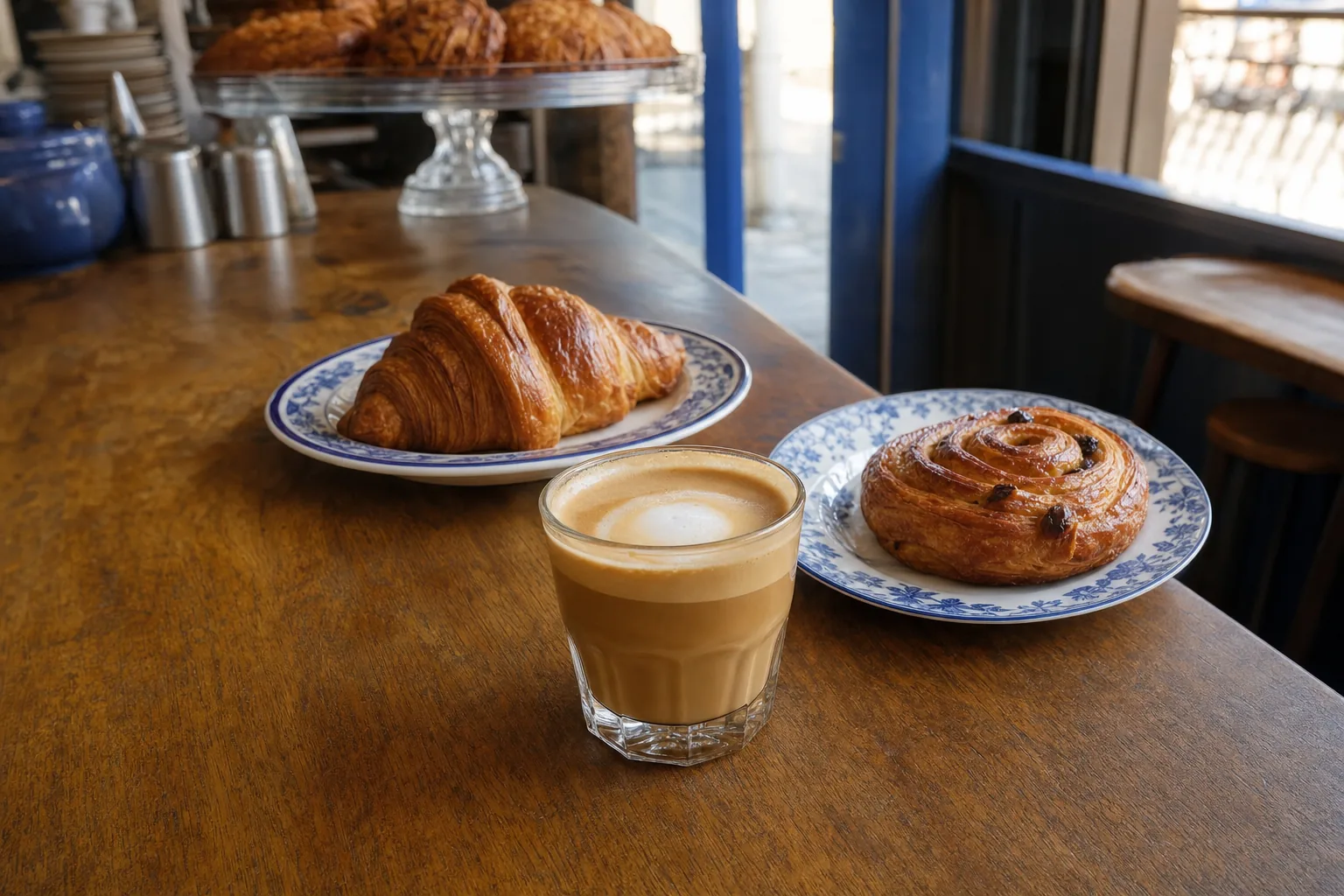
What is a cortado? It’s espresso softened with an equal amount of warm steamed milk, served in a small cup. At Frenchy Coffee NYC, our version is 4 ounces, which may be larger than you expect from such a compact drink.
We analyzed 6 pages ranking for what is a cortado (Home Grounds, Cozymeal, The Takeout, Drinktrade, Cafendo, Copenhagen Coffee Lab) and found that only 3 agree on a 4-ounce serving, while the rest range from 4 to 7 ounces. None of the 6 gives a caffeine figure.
What Is a Cortado?
A cortado is an espresso drink made with equal parts espresso and warm steamed milk. The milk softens the espresso’s sharp edges while leaving its coffee flavor easy to taste. That balance is the point: you get more milk than in a macchiato, but far less than in a latte.
The name comes from the Spanish verb cortar, meaning “to cut.” In the drink, milk cuts the intensity of espresso. It doesn’t hide the coffee under a thick layer of foam or turn it into a large, milky drink.
The cortado is commonly traced to Spain, with accounts linking its roots to the Basque region. From there, it spread across the Iberian Peninsula and into Latin America. The drink has also picked up different names along the way.
In American cafés, you may also see the name “Gibraltar.” The term came from a small glass used for serving a cortado-style drink. Some cafés use “Gibraltar” and “cortado” for much the same drink, while others may treat them as distinct menu items. If the name leaves you unsure, ask what the café means by it.
Size helps explain the drink. A common cortado serving is about 4 ounces, often in a small glass tumbler. Frenchy Coffee NYC’s cortado is also 4 ounces, made with our double-shot espresso and an equal volume of warm steamed milk. It’s a concise drink, but not a single sip.
Our café is family-owned, and founders Perrine and Aurélien come from Évian-les-Bains in the French Alps. That French café setting is part of the experience, though the cortado itself comes from Spanish coffee culture. You can learn more about our story from Évian to East Harlem.
Think of a cortado as a small, espresso-led drink with enough milk to round it out. If you order one expecting a tiny latte, the balance may surprise you.
What Goes Into a Cortado? Espresso, Milk, and Size
The classic idea is simple: espresso, an equal amount of warm milk, and very little foam. That ratio gives the drink its identity. Add much more milk and it becomes a different kind of espresso drink, even if it still fits in a small cup.
At Frenchy Coffee NYC, we make our cortado with a double shot of espresso and the same volume of warm steamed milk. The serving is 4 ounces. That proportion keeps the espresso present while the milk rounds out its taste.
Milk choice changes the flavor and feel. The milk’s natural sweetness may make a shot seem less sharp, though the espresso remains clear. The cortado uses less milk than a latte, so the milk’s flavor still matters.
Texture matters too. A cortado should feel smooth, not foamy. Steam the milk just enough to warm it and create a fine, light texture. A thick cap of airy foam takes the drink in a cappuccino-like direction.
Many café recipes use a small glass, sometimes called a Gibraltar glass. The vessel helps keep the serving compact and makes the espresso-to-milk balance easy to see. But the glass alone doesn’t define the drink. The proportion does.
To make one with an espresso machine, pull the espresso into a small cup or glass. Steam an equal volume of milk with only a little air added at the start. Swirl the milk until it looks glossy, then pour it over the espresso. Serve it soon after pouring, while the milk is warm and smooth.
Checking the milk’s warmth can help at home. A common target for steamed milk is about 140°F, or 60°C. Keep the milk below a boil, and stop steaming before it turns stiff or forms a large foam cap. If you don’t use a temperature check, stop when the pitcher feels warm but still comfortable to hold briefly.
No espresso machine? A concentrated coffee base can work, though it isn’t true espresso. Use a small amount of concentrated coffee, then add the same volume of warmed milk. A simple milk-mixing tool can help mix air into warm milk, but use it lightly. Too much foam will change the drink’s feel.
For a quick ratio without a scale, use the same small measuring cup for the espresso and milk. Pour one portion of each. If you have no measuring cup, pour the espresso first, then add milk until the two look close to even. This is a useful estimate, not a precise measure.
Plant-based milks can work, too, but each has its own taste and texture. Oat milk may feel creamy and bring a mild grain-like sweetness. Almond milk can taste more nutty and may feel thinner. Other milk options may have their own flavor. If you’re ordering out, ask which options the café has before you choose. At home, warm the milk gently and avoid vigorous frothing.
A cortado doesn’t need added syrup or sugar to count as one. Those are personal additions, not part of the basic definition. The drink’s appeal comes from the espresso and milk meeting in equal measure.
How a Cortado Tastes and Feels
A cortado tastes like espresso first, with milk smoothing the finish. The coffee remains easy to notice, but it can seem less sharp than a straight shot. The milk adds a gentle sweetness and a softer, rounder feel.
The exact taste depends on the espresso. A shot with bright or fruity notes may keep some of that character in the drink. A deeper, chocolate-like espresso may taste rounder and more familiar. Milk doesn’t erase those differences. It changes how strongly they come through.
The texture is usually smooth and compact. There should be little foam, so the drink doesn’t feel airy or spoon-thick. A sip should bring together the espresso and milk rather than separate them into a layer of coffee below a mound of foam.
That’s why a cortado can suit someone who likes espresso but wants a softer cup. It can also suit a latte drinker who wants a stronger coffee taste in a smaller serving. It won’t satisfy someone looking for a large drink to sip over a long stretch. The glass is small by design.
Don’t judge the drink by its size alone. A 4-ounce cup can hold a direct, full coffee flavor because the milk doesn’t take over. The balance can make each sip feel more like a small coffee than a warm glass of milk with espresso added.
For a local stop, Frenchy Coffee NYC is at 129 East 102nd Street in East Harlem, also known as El Barrio. Our café serves espresso drinks alongside pastries made in the café, so you can pair a small coffee with something to eat. Details about our place in the neighborhood are on the Frenchy Coffee East Harlem page.
Food pairing is a matter of taste. A plain pastry can let the espresso stay in focus. A sweet pastry may make the milk’s sweetness feel more pronounced. If you want to compare the coffee with a richer bite, take a sip between bites rather than adding sugar right away.
The cortado is best enjoyed while it’s warm. It isn’t a shot to gulp down, but it also isn’t meant to sit untouched for ages. Take a few unhurried sips and notice how the milk changes the espresso as the drink cools.
Cortado vs. Macchiato, Cappuccino, and Flat White
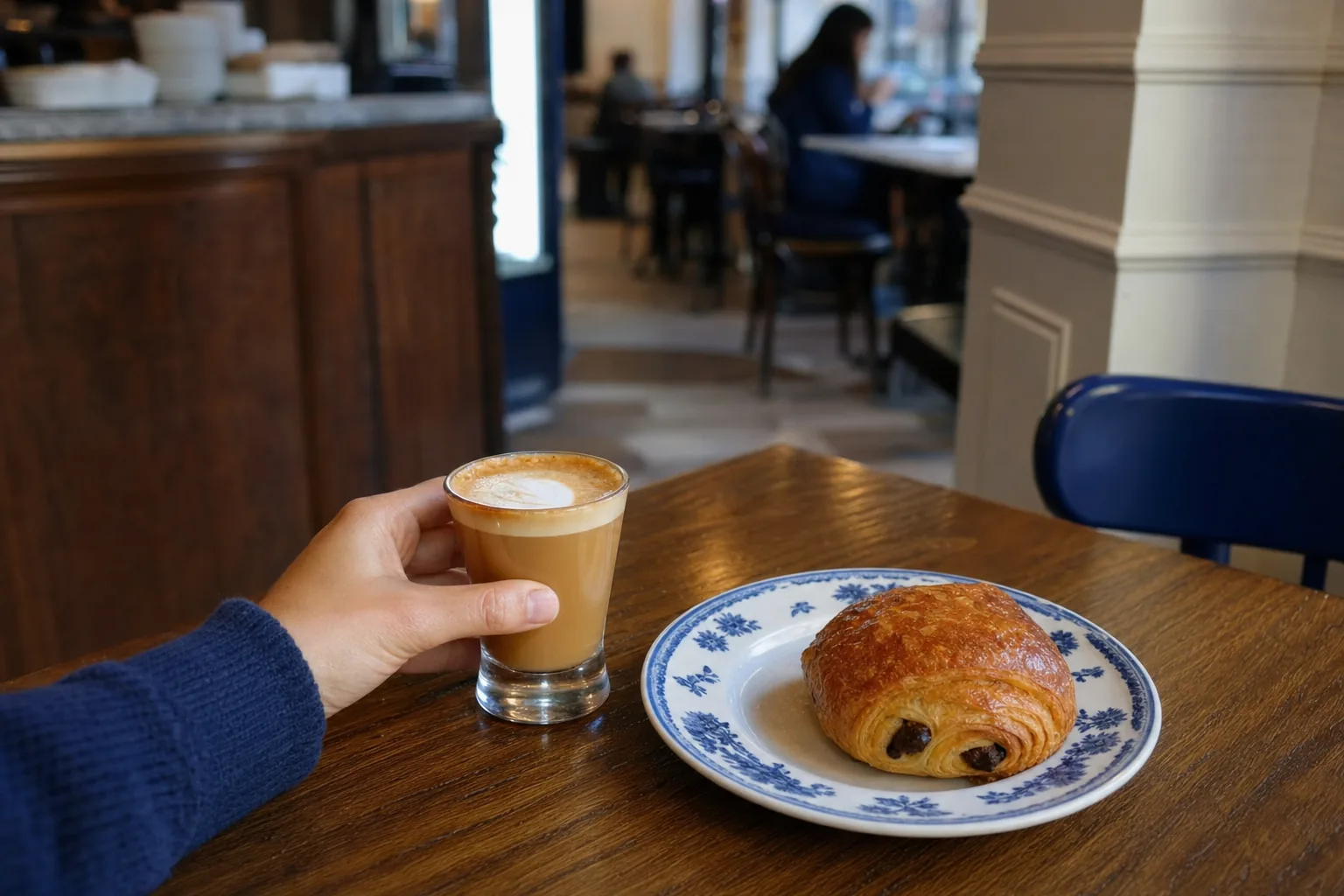
These drinks all combine espresso and milk, but the amount of milk and the texture can change the whole cup. A cortado sits in the middle of the espresso-and-milk family: more milk than a macchiato, less than a latte, and little foam.
| Drink | Milk and texture | Choose it if you want |
|---|---|---|
| Macchiato | A small amount of milk or foam | A very espresso-forward drink with just a mark of milk |
| Cortado | Equal parts espresso and warm milk, with little foam | A small drink with a clear coffee taste and a softer finish |
| Cappuccino | More airy foam than a cortado | A lighter, foamier texture |
| Flat white | Fine, velvety milk texture; the recipe can vary by café | A smooth espresso drink with more milk texture |
| Latte | More milk and a larger serving in many cafés | A creamier, milk-forward drink |
A macchiato is the closest relative if you want less milk. Its name means “marked” in Italian, and the milk is usually a small mark on the espresso. A cortado has enough milk to make a balanced mix, not just a small spot on top.
A cappuccino differs most in texture. Its foam is more noticeable, giving it an airier feel. Recipes vary between cafés, so the exact proportions aren’t universal. If you want the coffee and milk to blend with little foam, choose a cortado instead.
A flat white is also smooth, but its milk is often more finely textured. The drink may contain more milk than a cortado, depending on the café’s recipe. Ask about size or milk texture if the distinction matters to you.
A latte is usually the milkier choice. It’s a good pick when you want a longer drink with a gentler coffee taste. A cortado suits a shorter break or a stronger espresso flavor without drinking the shot straight.
There isn’t one universal café recipe for every drink name. A useful question is, “How much milk is in your cortado?” That gives you a clearer answer than asking only about the glass or the name on the menu.
The Frenchy Coffee specials page is where we share seasonal drinks and café updates. A cortado, though, is defined by its espresso-and-milk balance rather than a flavor add-on.
Does a Cortado Have More Caffeine Than Other Coffee Drinks?
Not by definition. Caffeine depends mainly on the espresso used and how many shots go into the drink. Milk changes the taste and volume, but it doesn’t remove the caffeine from the espresso.
Frenchy Coffee NYC’s cortado uses a double shot of espresso. A cortado made with a single shot may contain less caffeine than one made with a double. A latte or cappuccino could have less, the same, or more, depending on the café’s recipe.
That’s why drink names alone can’t tell you exactly how much caffeine is in your cup. Ask how many espresso shots the recipe uses if you’re keeping track. The roast and coffee itself may also affect the amount, so a café’s exact recipe is the most useful starting point.
People differ in how they respond to caffeine, and sensitivity can vary from person to person.
If caffeine affects your sleep, consider when you drink coffee as well as how much you drink. A small serving can still contain a full espresso shot. If you’re pregnant, take medicine that affects caffeine, or have a health concern, ask a health professional what amount makes sense for you.
Calories also depend on what goes into the cup. A plain cortado has espresso and milk. Sweeteners or flavored additions change that, and the milk choice can change the drink’s energy content. Without the recipe details, a single calorie figure wouldn’t fit every café’s version.
For a café drink, treat general composition information as context rather than a precise count for a cup made with a particular espresso recipe.
When to Order a Cortado in an NYC Café
Order a cortado when you want espresso flavor with a little warmth and softness from milk. It works well for a short coffee break, or when a latte feels too milky and a straight espresso feels too intense.
In a New York café, you may see the drink listed as a cortado or a Gibraltar. If the menu doesn’t explain the difference, ask whether the café uses equal parts espresso and milk. That small question helps set your expectations for the size and taste.
Ordering is simple: ask for a cortado, then mention any milk preference if the café has options. If you want to avoid added sweetness, order it plain. If you prefer a specific serving style, ask before the barista starts making it.
Expect a small cup. The drink isn’t meant to be upsized in the same way as a latte, because adding milk changes the balance. If you want more coffee, ask about an extra shot. If you want a longer, milkier drink, a latte may fit better.
At Frenchy Coffee NYC, we serve our 4-ounce cortado with a double shot of espresso and an equal volume of warm steamed milk. We’re at 129 East 102nd Street in East Harlem, between Park and Lexington Avenues. The café is open seven days a week, with weekday and weekend hours listed on our site.
Our café is family-owned, and Perrine and Aurélien brought their French roots from Évian-les-Bains to East Harlem. That context shapes the café, while the cortado itself keeps its Spanish name and espresso-to-milk balance. It’s a fitting order when you want a small coffee alongside a pastry made in the café.
A cortado can also be a useful way to compare espresso at different cafés. Since there’s little milk to cover the coffee, the shot’s taste remains clear. Notice whether it tastes bright, deep, or more bitter to you. There’s no need to know tasting terms to decide whether you enjoy it.
For a first order, keep it plain and ask for the café’s standard cortado. Then you’ll know what that shop means by the name before changing the milk or adding anything sweet.
Cortado FAQs
Is a cortado stronger than a latte?
A cortado usually tastes more coffee-forward than a latte because it has less milk. Its caffeine amount depends on the espresso recipe, not the drink’s name. A latte with the same number of shots can have similar caffeine, even though it tastes milder because it contains more milk.
Is a cortado the same as a Gibraltar?
A Gibraltar is often a cortado-style drink served in a small glass, and some U.S. cafés use the names interchangeably. Other cafés may have their own meaning for each term. If the distinction matters, ask what the shop puts in its Gibraltar and how it differs from its cortado.
How many ounces are in a cortado?
A common cortado is about 4 ounces, though café recipes can vary. Frenchy Coffee NYC serves a 4-ounce version made with a double shot of espresso and an equal volume of warm steamed milk. The small size helps keep the drink’s espresso-and-milk balance intact.
Can you make a cortado without an espresso machine?
Yes, you can make an approximation with concentrated coffee prepared without an espresso machine. Add an equal volume of warm milk and keep the foam light. This approach doesn’t produce true espresso, so the flavor will differ, but it can give you a small, balanced coffee at home.
Does a cortado have sugar?
A basic cortado is made with espresso and warm steamed milk, without added sugar. Milk can make the drink taste slightly sweeter, but you can add sugar if you prefer. If you see a variation on a menu, ask how it’s made.
Conclusion
Choose a cortado when you want espresso’s flavor with just enough warm milk to soften it. For a 4-ounce version in East Harlem, stop by Frenchy Coffee NYC at 129 East 102nd Street and try one with a pastry made in the café.