 Frenchy Coffee
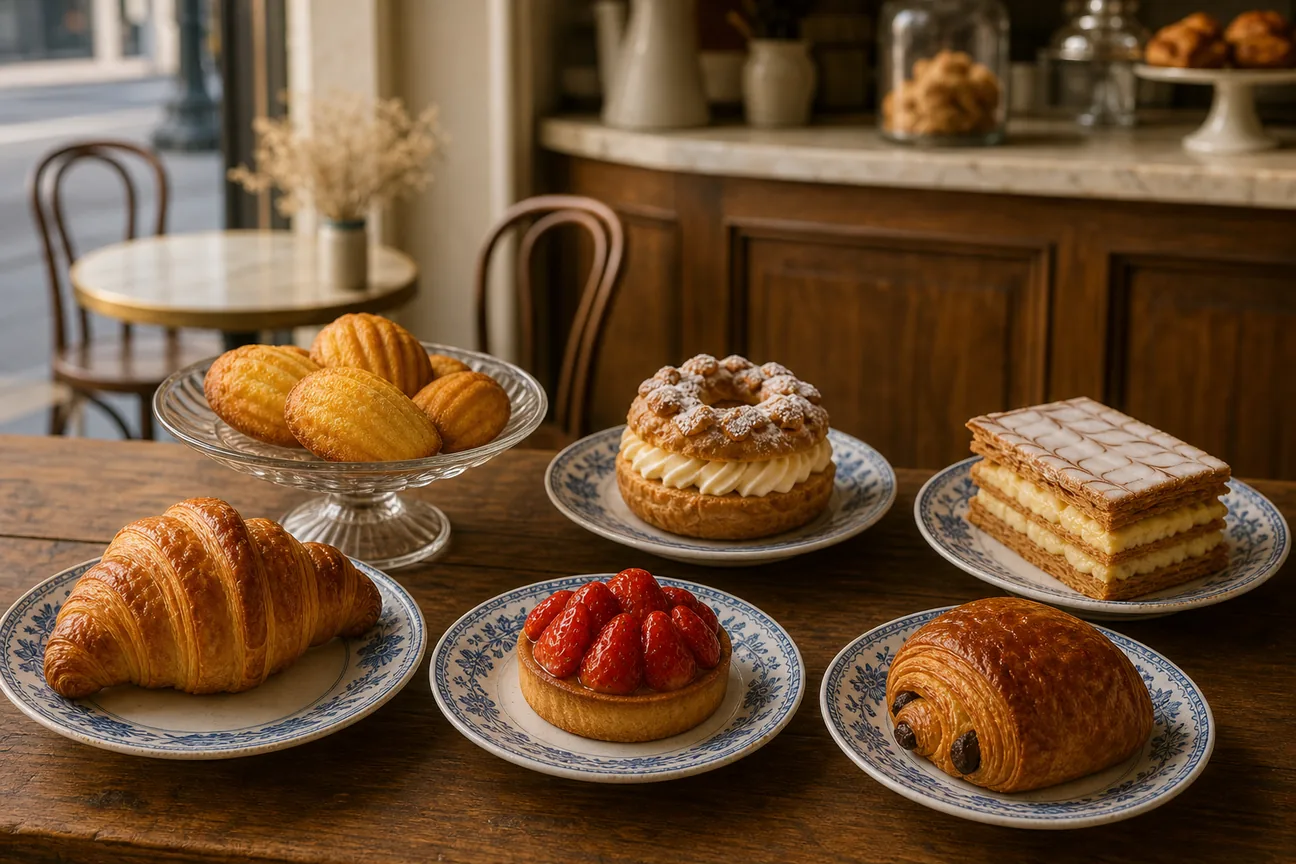
A flaky pastry can make a quick coffee stop feel like a treat. The types of French pastries you’ll find in New York range from simple butter-rich classics to bold new fillings, and each has its own best moment.
Here are six worth knowing, with notes on their dough, texture, roots, and how to enjoy them around NYC.
1. Butter Croissant: A Classic, Flaky Breakfast Pastry
A butter croissant is a yeast-raised pastry folded with butter to form thin layers. It’s a classic pick for breakfast, especially when you want something light enough to pair with coffee.

The word croissant means crescent, a nod to its familiar curved shape. The French-style croissant most people picture today is known for its layered, flaky dough. A croissant is made from yeast-based dough rolled and layered with butter. It should be crisp outside and soft inside.
That contrast is the point. The outside should crackle when you break it, while the inside stays tender rather than dry or bready. In a bakery, the folded layers come from repeated rolling and folding of dough with butter. The dough then rises before baking, which gives the pastry its lift and airy middle.
For a simple breakfast, eat it plain with coffee. A small espresso drink works well when you want the butter flavor to stay in focus. If you’re visiting Frenchy Coffee NYC in East Harlem, our French bakery page near the Upper East Side shares café details. Our croissants aren’t made in-house, so we keep that distinction clear.
A butter croissant listed at $5.50 makes a useful point of comparison: a classic pastry with few frills, where the dough and butter do the work.
2. Almond Croissant: A Rich Pastry with Almond Cream
An almond croissant starts with a croissant, then adds almond cream and a second bake. It suits a slower breakfast or a mid-afternoon snack when you want a sweeter, fuller bite.
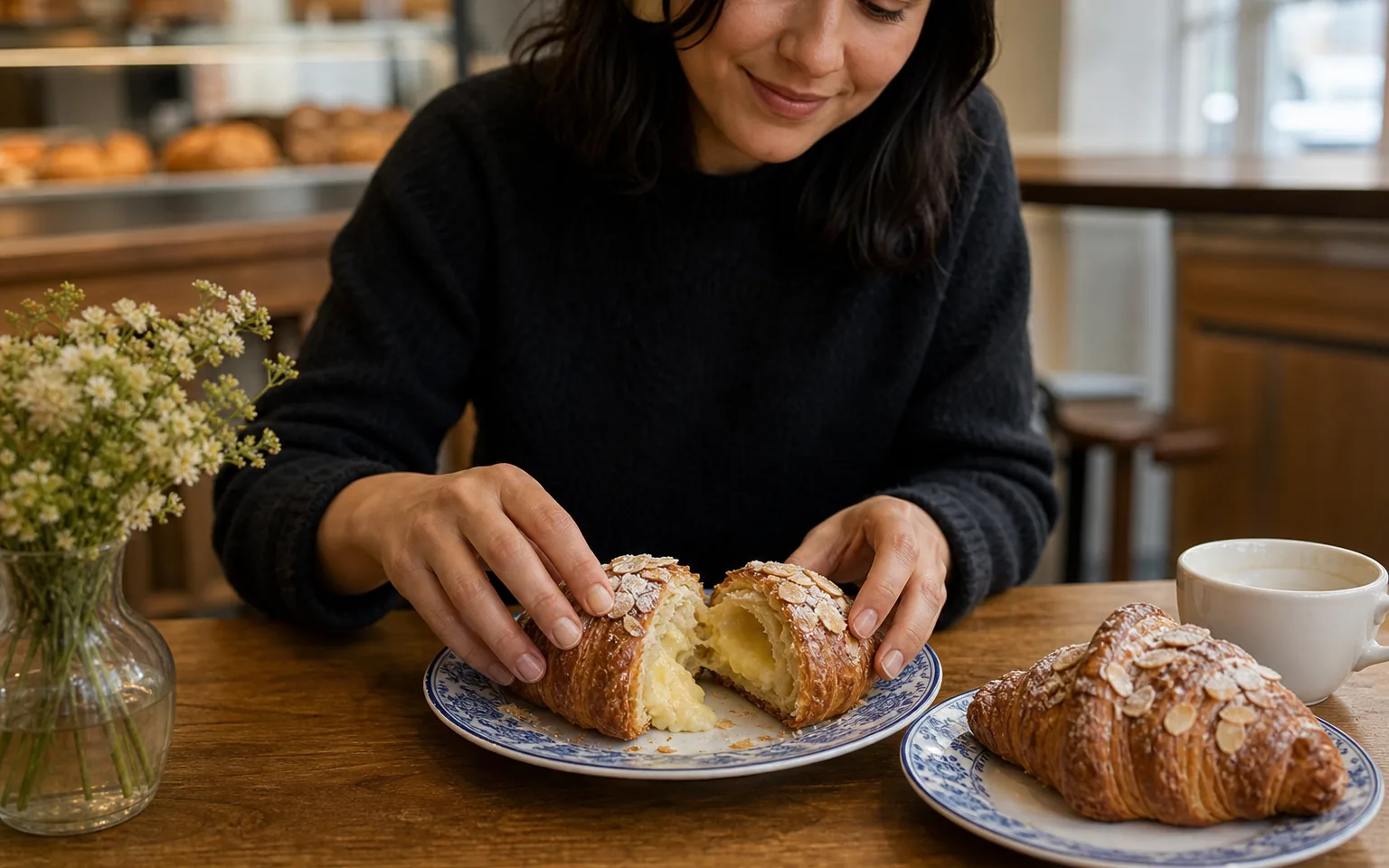
One story behind the pastry: French bakeries used day-old croissants by filling them with almond cream and baking them again. The filling, often called crème d’amande, brings together ground almonds, butter, and eggs. It becomes soft and rich inside the pastry while the outer layers turn crisp again.
Many versions also get a light syrup brush and sliced almonds on top. That adds a crisp finish and helps the pastry stay moist through its second bake. A dusting of powdered sugar is common, though the almond filling is already the main event.
Almond croissants are often eaten at breakfast, during the French afternoon snack known as le goûter, or at brunch. Coffee is a natural match. Tea works too, especially if you want a gentler drink alongside the sweet almond filling.
In NYC pastry listings, almond croissants fall around $5 to $6.50. That range is close to the plain butter croissant, but the extra filling makes the pastry feel more like a small meal. It’s a good choice when a plain croissant sounds too spare.
At home, a day-old croissant can be filled and baked again. The key is to spread the cream evenly, so the center warms without leaving one end heavy and the other dry. The result should still have distinct layers, not a soggy base.
3. Pain au Raisin: A Spiral of Pastry Cream and Raisins
Pain au raisin is a spiral of laminated dough, pastry cream, and raisins. It’s a handy café choice when you want a pastry with fruit and cream in every bite.
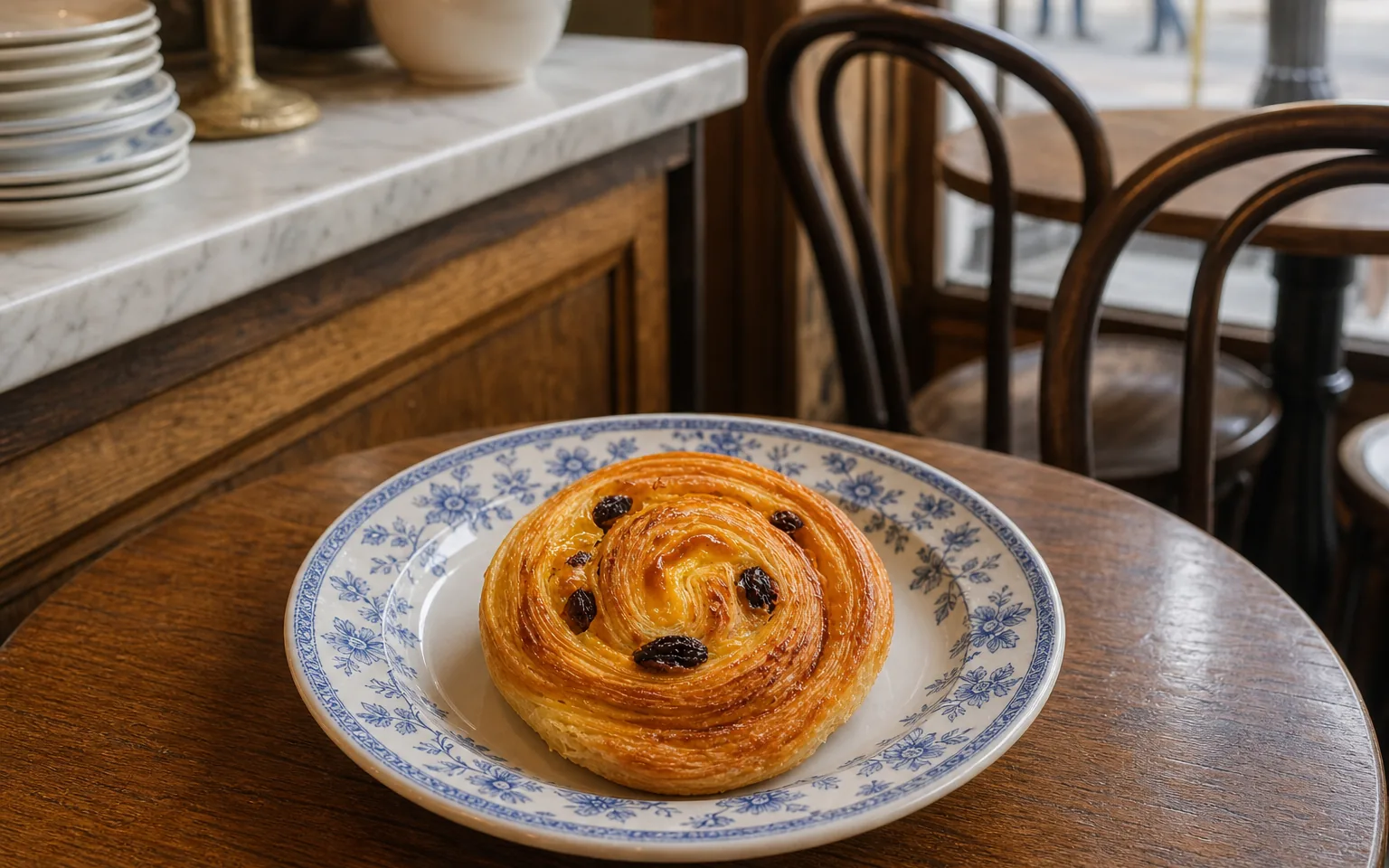
The dough is closely related to croissant dough: it’s rolled and layered, then spread with vanilla pastry cream and raisins before being shaped into a coil. Once baked, the spiral shows its layers along the cut edge. The center tends to be softer, while the outside has a light crispness.
Some bakeries call a similar spiral escargot, or snail, because of its shape. Names and finishes can vary, but the key parts stay familiar: laminated pastry, cream, and raisins. A glaze may add a little shine and sweetness.
Pain au raisin is often served with morning coffee. It also makes sense as an afternoon snack because the cream and fruit give it more heft than a plain croissant. If you’re pairing it with coffee in East Harlem, a cortado made with espresso and warm milk keeps the drink small and lets the pastry stay in the lead.
Try eating it from the outside in, or pull off the spiral one layer at a time. The first way gives you a mix of crust and center; the second lets you notice how the texture changes as you reach the creamier middle.
This pastry is a clear example of viennoiserie, the family of yeast-raised and often laminated breakfast pastries. Pâtisserie usually points to the wider craft of cakes and desserts. Many French bakeries make both, so the terms can overlap on a shop sign even when the pastries themselves differ.
4. Mille-Feuille: Crisp Layers and Pastry Cream
Mille-feuille is built from crisp puff pastry and pastry cream. It’s a good pick for a sit-down dessert, where you can improve your time with its delicate layers.
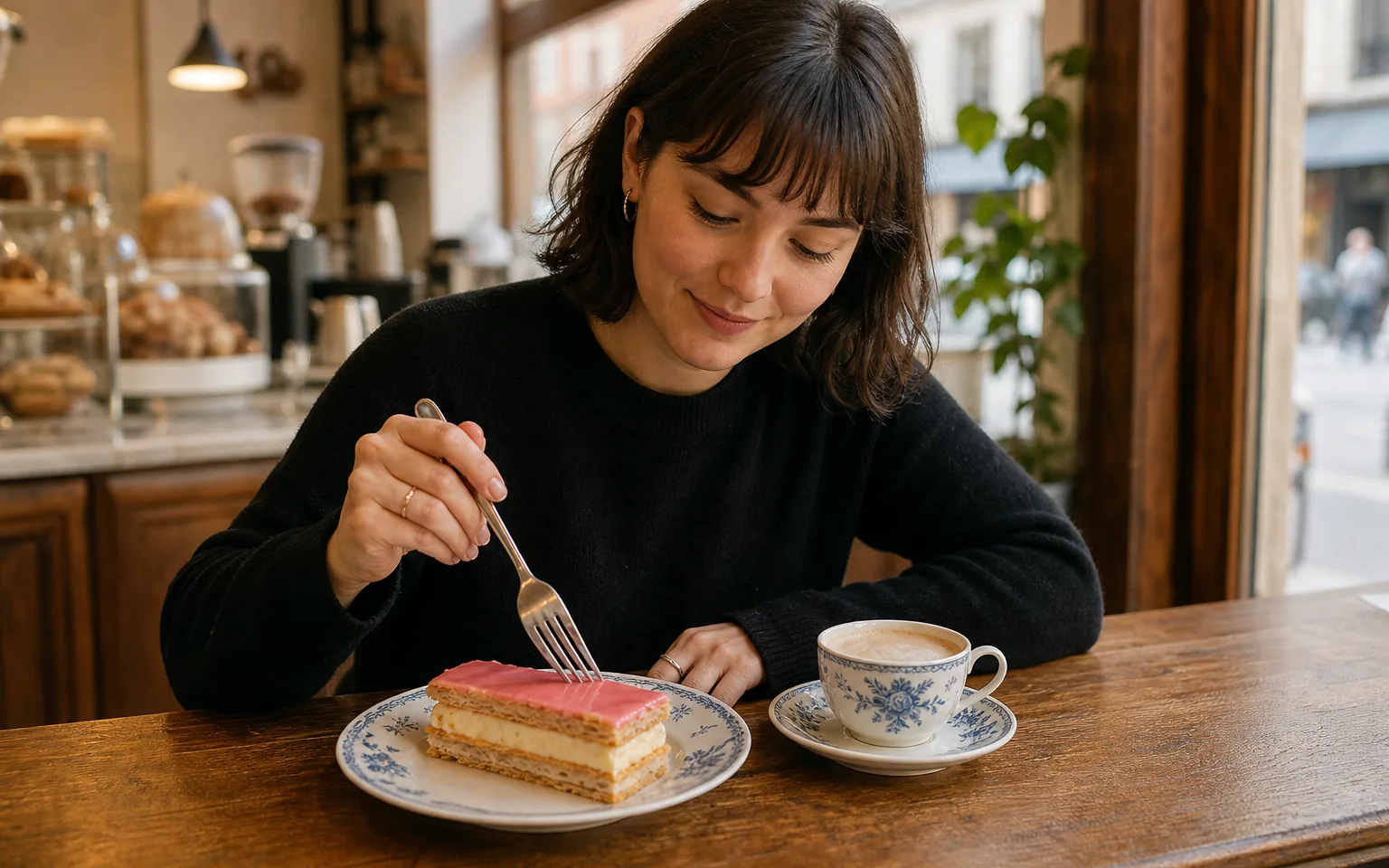
The name means “a thousand leaves,” a reference to the many thin layers in the pastry. A classic version stacks sheets of puff pastry with pastry cream between them, then adds a glazed top. The contrast is what makes it memorable: crisp pastry gives way to smooth cream, then crisp pastry again.
The dessert has a long place in French pastry. Mille-feuille is made with layered puff pastry and pastry cream. The traditional form has three pastry layers with cream between them, though the look can vary by bakery.
Because the pastry is crisp and the filling is soft, mille-feuille is best eaten while the layers still hold their shape. Use a fork, but expect some crumbs. A café table is easier than a crowded sidewalk if you want to keep the cream from slipping out with the first bite.
Pair it with coffee or tea. A plain drink helps balance the cream and icing without competing for attention. Mille-feuille is listed around $3.50 to $7, depending on the pastry and serving style.
There are other French pastries with a layered or creamy feel. A Paris-Brest uses choux pastry with praline cream and takes its name from a bicycle race. Another pastry pairs choux puffs with cream. But mille-feuille is the one to choose when crisp pastry sheets are the main draw.
At Frenchy Coffee NYC, the café’s menu includes pastries and savory bakes made in the café, with croissants as the exception. The food menu gives the current picture of what we serve during a café stop.
5. Kouign-Amann: A Caramelized Specialty from Brittany
Kouign-amann is a Breton pastry made with laminated dough, butter, and sugar. It’s the one to choose when you want a crisp, caramelized outside and a soft, rich center.
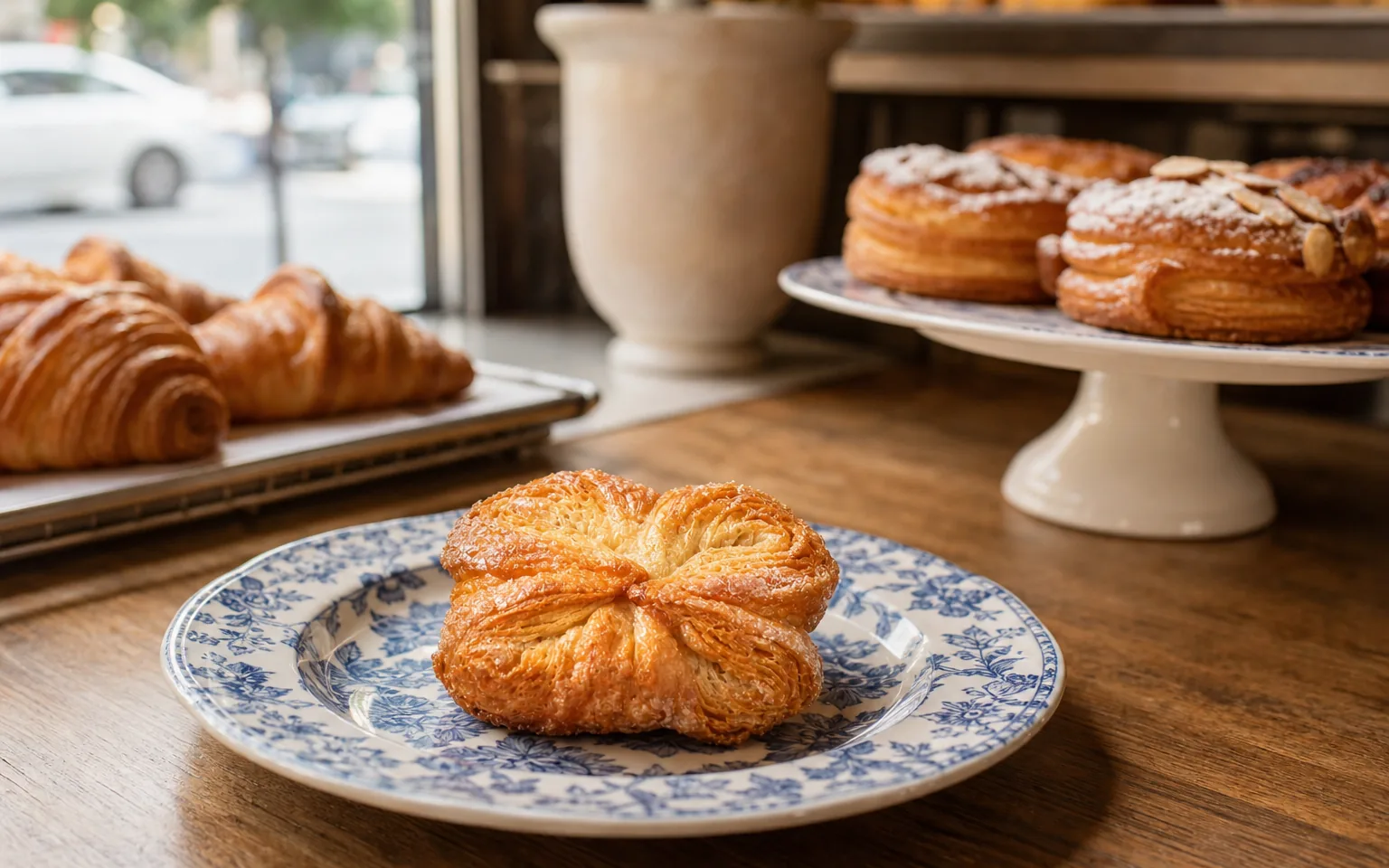
The name is Breton for “butter cake,” and Brittany is its home region. The pastry folds butter and sugar into dough, then bakes until the sugar caramelizes. That process creates a glossy, crisp surface while the inside stays tender.
Its exact early history is debated. The classic shape is a round cake, while bakeries may also sell smaller individual forms. In either size, it’s a pastry with a strong buttery flavor and a sweet crust.
Warm it slightly if you can. Heat softens the inner layers and brings the butter and caramel notes forward. It works with coffee, especially a small espresso drink, or with tea if you want a softer pairing.
In NYC pastry listings, kouign-amann is around $5.50. That price sits near the classic croissant, though the pastry has a denser feel and a caramelized finish. Consider sharing a larger one if you’d rather taste it without making it your whole snack.
New York bakeries sometimes adapt the size or add flavors, but the defining features remain the folded dough and browned sugar. It’s a good example of how regional French baking can travel without losing its basic shape or method.
For a pastry-and-coffee stop in East Harlem, Frenchy Coffee NYC is family-owned and was founded by Perrine and Aurélien, who come from Évian-les-Bains in the French Alps. We make pastries in the café, with croissants made elsewhere.
6. Ube Éclair: A Choux Pastry with a Modern Filling
An ube éclair pairs French choux pastry with a cream flavored with ube, or purple yam. It’s a modern choice for anyone who likes a familiar pastry shape with a less usual filling.
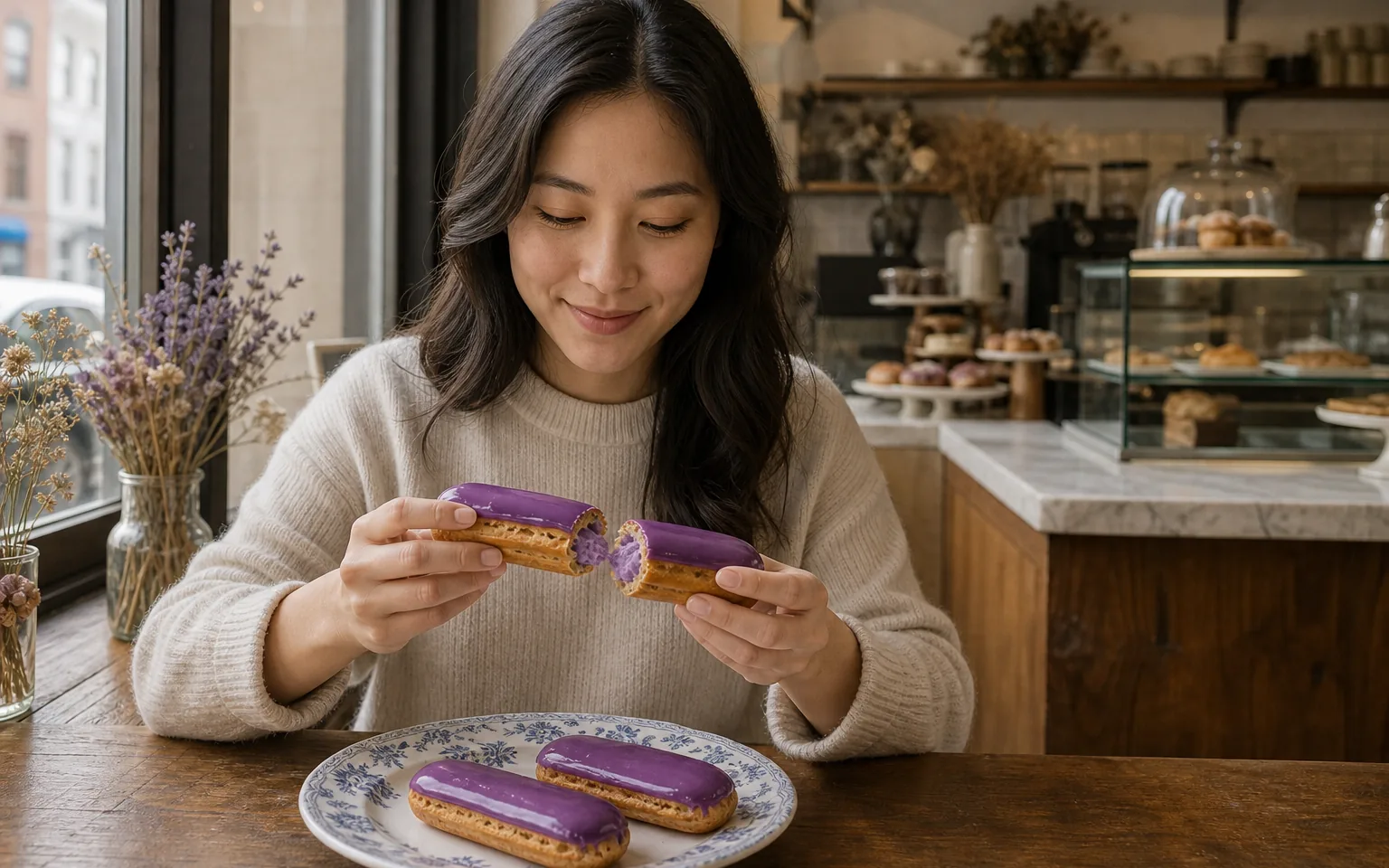
The éclair itself is a long, hollow pastry made from pâte à choux. The dough puffs in the oven, leaving space inside for cream. A glaze or icing usually finishes the top. A classic éclair is an oblong choux pastry filled with cream and often topped with icing.
Choux pastry also forms the base for profiteroles, which are small round puffs often filled with cream. Éclairs and profiteroles share a dough, but their shapes and serving styles differ. The long éclair is easy to hold; a profiterole is usually eaten with a fork.
The classic éclair often has chocolate cream or icing. The ube version uses purple yam cream instead, bringing a distinct color and flavor to the French form. It’s a clear example of how NYC bakeries combine a traditional pastry method with flavors that speak to the city’s many food cultures.
Ube éclairs are listed around $9 to $11. If you’re curious about a new flavor, it’s a fun pastry to split or enjoy slowly with coffee.
Éclairs are best when the shell still has some structure and the cream tastes fresh. Choose one early in your café stop if you have other errands ahead, since filled pastries can soften as they sit.
Quick Comparison: Six French Pastries by Texture and Occasion
Use texture and timing to choose. A flaky viennoiserie fits a morning coffee; a cream-filled pastry may be easier to enjoy as a planned dessert stop. Prices can vary by bakery.
| Pastry | Texture and flavor | Good moment | NYC listed price |
|---|---|---|---|
| Butter croissant | Flaky outside, tender center, buttery taste | Breakfast with coffee | $5.50 |
| Almond croissant | Crisp layers with soft almond cream | Brunch or afternoon snack | $5 to $6.50 |
| Pain au raisin | Soft spiral with pastry cream and raisins | Morning coffee break | Not compared here |
| Mille-feuille | Crisp pastry sheets with smooth cream | Sit-down dessert | $3.50 to $7 |
| Kouign-amann | Caramelized crust with a buttery center | Slow coffee break | $5.50 |
| Ube éclair | Soft choux shell with purple yam cream | Afternoon treat | $9 to $11 |
The examples include a butter croissant at $5.50 and an ube éclair at $9 to $11. Price alone won’t tell you which one you’ll enjoy most, but it can help you decide whether to stick with a classic or try a more unusual filling.
For a familiar start, pick a croissant or pain au raisin. If you want a crisp dessert with cream, choose mille-feuille. And if your main goal is to taste a new flavor, the ube éclair makes the biggest departure from classic fillings.
FAQ: Types of French Pastries
What are the most common French pastries?
Common French pastries include croissants, pain au raisin, éclairs, macarons, profiteroles, and mille-feuille. Croissants and pain au raisin belong to viennoiserie, while éclairs and mille-feuille are usually thought of as pâtisserie. Many French bakeries sell both, so you’ll often see the two styles side by side.
What’s the difference between viennoiserie and pâtisserie?
Viennoiserie includes yeast-raised pastries such as croissants and pain au raisin, often made with laminated dough. Pâtisserie is the broader craft of French cakes and desserts, including éclairs and mille-feuille. The terms describe different pastry traditions, but a shop may make both under one roof.
What is the difference between a croissant and a pain au raisin?
A croissant is a curved or straight layered pastry, usually eaten plain or with a filling. Pain au raisin uses similar laminated dough, but it’s rolled into a spiral with pastry cream and raisins. Choose the croissant for a simpler buttery bite, or the spiral when you want cream and fruit too.
What does a kouign-amann taste like?
Kouign-amann tastes buttery and sweet, with a caramelized crust and a softer center. The pastry comes from Brittany and uses folded dough with butter and sugar. It’s richer than a plain croissant, so a small serving with coffee can be enough for a snack.
Which French pastry goes well with coffee?
Many French pastries pair well with coffee. A butter croissant is a classic morning match, while pain au raisin suits a longer coffee break. For a richer pastry, almond croissant or kouign-amann works well with a small espresso drink. If you prefer dessert, try coffee with mille-feuille.
Conclusion
Start with a butter croissant if you want the classic, or choose an ube éclair for a newer flavor. For a pastry stop in East Harlem, visit Frenchy Coffee NYC at 129 East 102nd Street and see what’s on the counter.