 Frenchy Coffee
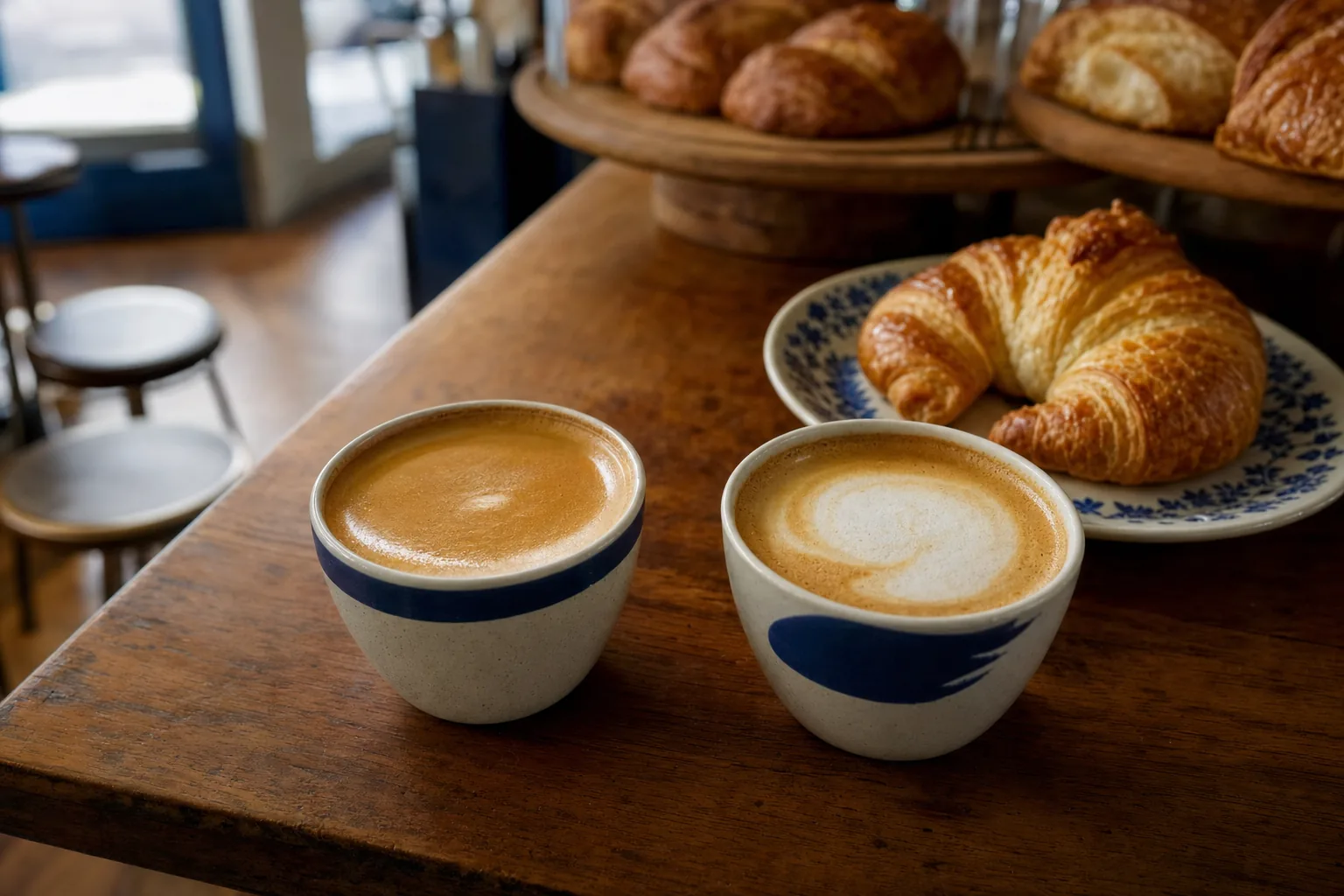
A flat white usually tastes more like espresso, while a latte is milkier and often comes in a larger cup. In this flat white vs. latte comparison, the key differences are how the milk is steamed, how much goes into the cup and how many espresso shots the café uses.
Recipes vary by café, so the name alone can’t tell you everything. Here’s what to look for when you order in New York City.
Milk Texture and Espresso: The Main Difference
A flat white is espresso topped with steamed milk and fine microfoam. A latte is espresso with more steamed milk and a layer of foam. Both drinks can have glossy milk, but the flat white is usually made with less air and a thinner foam layer.
That change in texture starts at the steam wand. For a flat white, the barista adds a little air, then rolls the milk until it looks smooth and shiny. For a latte, the milk is often aerated a bit more. Its foam can feel lighter at the first sip, while flat white milk tends to blend into the espresso.
Cafés set their own recipes, including the espresso-to-milk balance and the amount of foam. Milk texture is one factor that shapes how each drink tastes and feels.
Latte art can appear on either drink. A flat white doesn’t need a thick foam cap to hold a design. Fine microfoam can make a smooth surface that a skilled barista can pour into a heart or another pattern. So a design on top doesn’t tell you which drink you’ve been served.
One quick way to judge the difference is to look at the foam, then taste the first sip. A thick, airy cap points toward a latte style. A smooth, integrated layer is more typical of a flat white. But cafés set their own recipes, so these are clues, not rules.
| What to notice | Flat white | Latte |
|---|---|---|
| Milk texture | Fine, glossy microfoam mixed through the milk | Steamed milk with a more visible foam layer |
| Espresso presence | Usually more pronounced for the drink’s size | Often softer because there’s more milk |
| Foam on top | Thin and smooth | Usually more noticeable and airy |
| What to ask | How many shots, and is it made with a ristretto? | How many shots come in this size? |
These differences depend on the café’s method. A shop that uses very fine microfoam for every milk drink may make the two look alike. Ask about the recipe if you want a clearer distinction.
Cup Size and Milk-to-Espresso Balance
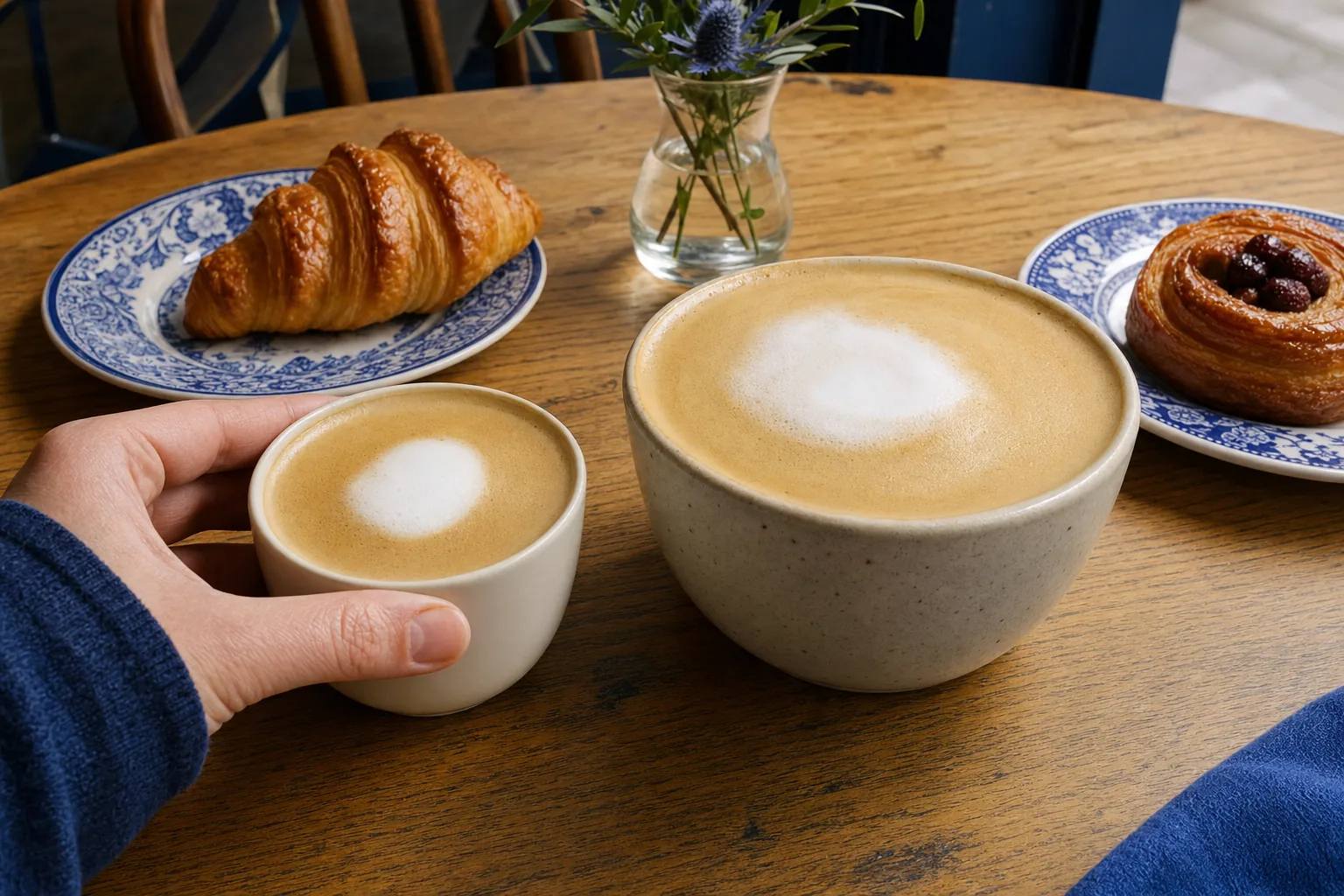
A flat white is commonly served in a smaller cup than a latte, but there’s no single size rule that every café follows. Some reference recipes place both drinks within overlapping serving ranges. In practice, a café may pour a flat white into a compact cup and a latte into a larger one.
That cup choice changes how much milk surrounds the espresso. A flat white usually has less milk for its size, which lets the coffee taste fuller. A latte has more room for steamed milk, so the espresso can feel gentler. The effect is easy to notice when the shot count stays the same but one drink is larger.
Don’t rely on cup size alone. Some shops make both drinks with a similar number of shots, then change the milk volume and texture. Others use different shot counts. If a large cup matters to you, ask what size the café serves and how many shots it contains.
Think of the menu name as a starting point. The actual balance comes from the espresso dose, the amount of milk and the foam. A small latte can taste more coffee-forward than a large one. A bigger flat white can also drift closer to a latte in taste if its milk volume rises.
Ratios can help explain why the drinks taste different, but they shouldn’t be treated as a promise about every cup. Baristas may follow local habits or a house recipe. The important question is not whether a café uses one exact ratio. It’s whether its cup size and shot count match what you want to drink.
For example, if you want a short coffee break before heading across East Harlem, the smaller flat white format may suit you. If you’d rather sip a larger drink on your way through the Upper East Side, a latte may feel like a better fit. That’s a serving preference, not a guarantee about how long any one drink will last.
There’s another usable point: the same name can mean a different size at different cafés. In the United States, some menus make the flat white a compact drink, while others offer a larger version. When the size is not clear on the menu, asking the barista is more useful than guessing from the label.
Our related cortado and flat white comparison looks at two smaller espresso-and-milk drinks. It can help if you want to compare a flat white with something even more compact.
Taste and Mouthfeel in Each Cup
A flat white tends to taste more coffee-forward because its milk supports the espresso instead of softening it as much. The flavor may seem bolder, even when the beans and shot are the same as those in a latte. That’s a matter of concentration in the cup, not proof that the espresso itself is stronger.
A latte usually tastes creamier and milder. More milk can round off sharp or bitter notes, so the espresso sits further in the background. If you like coffee but find a straight espresso too intense, that softer balance may be just right.
Milk texture shapes the feel of each sip. Fine microfoam gives a flat white a smooth, close texture. A latte can have a more obvious airy layer on top, followed by warm steamed milk below. Both can be well made. The difference is whether you want a unified, silky sip or a softer drink with more milk.
Ristretto is another possible difference. It’s a shorter espresso extraction that uses less water through the same coffee dose. Some cafés use ristretto in a flat white, which can taste concentrated and rounded. But it isn’t a fixed rule. Ask the barista rather than assuming every flat white has one.
That distinction also helps explain why two flat whites can taste different. One may use a standard espresso shot, while another uses a ristretto. The milk may be steamed with a different amount of air, too. Even the coffee blend affects the result, so drink names can’t describe every flavor note.
Latte art is not a reliable taste test. A flat white can have art, and a latte can arrive with a plain surface. What matters more is the amount of milk and how its texture meets the espresso. If the drink tastes mostly like milk, it may simply have a higher milk-to-coffee balance than you expected.
We often hear people use “stronger” to mean two different things. They may mean a more pronounced espresso taste, or they may mean more caffeine. The flat white can taste stronger per sip without having more caffeine overall. Shot count decides the latter.
Caffeine: What Changes and What Does Not
The number of espresso shots matters more than the drink name when you’re comparing caffeine. Milk adds volume and changes flavor, but it doesn’t add caffeine. So a flat white and a latte with the same espresso shots will be in a similar range, though the exact amount can vary with the coffee and how it’s pulled.
A flat white may have more caffeine than a latte when the café gives it more shots. That’s a recipe choice, not a property built into the name. A small latte with one shot could have less caffeine than a flat white with two. A latte with two shots could match a flat white with two.
Ristretto adds a wrinkle. Because it’s a shorter pull, it can taste more concentrated, but that doesn’t mean it contains more caffeine than a standard espresso shot. A ristretto-sized extraction usually has less caffeine than a standard espresso-sized one. The exact result depends on the coffee and preparation.
That’s why “strong” needs a little care. In a café, it may mean intense flavor. For caffeine, ask how many shots are in the drink. If you’re choosing between sizes, ask whether the larger cup adds more espresso or just more milk.
Caffeine affects people differently, so use your own response as a guide rather than treating a general daily limit as a personal target.
If you track caffeine closely, don’t assume that a smaller cup always means a smaller dose. It may have fewer ounces of milk and the same number of espresso shots as a larger drink. Ask about the shot count, then decide whether the serving size and flavor suit you.
For a routine morning order, this can be a simple question: “How many shots are in each size?” It gives you a better basis for comparing drinks than the name alone. If you’re sensitive to caffeine, you can also ask whether a smaller or lower-shot option is available.
Ordering a Flat White or Latte at an NYC Café
New York cafés don’t all use the same flat white recipe. Some serve it small with a thin layer of microfoam. Others make a version that looks closer to a small latte. This variation reflects the drink’s shifting definition, not necessarily a mistake by the barista.
When ordering, keep your question simple. Ask about cup size if you want to know how much drink you’ll get. Ask about shot count if you care about caffeine. If you’re after a particular texture, say you prefer silky milk with little foam or a creamier drink with more milk.
For a flat white, you might ask, “Is yours made with a ristretto or a standard espresso?” That tells you whether the café uses a shorter pull. You can also ask whether the drink is served in a smaller cup. Both details help set your expectations before the first sip.
For a latte, ask whether the size you choose includes one shot or more. A larger cup might come with an extra shot, or it might simply hold more milk. Cafés decide how their recipes scale, so there’s no safe assumption across every menu.
At Frenchy Coffee NYC, our family-owned café and bakery is at 129 East 102nd Street in East Harlem, between Park and Lexington Avenues. We serve espresso drinks, including both a flat white and a latte, alongside pastries and savoury bakes made in the café. If you’re nearby, stop in and ask our team what’s available for your coffee break.
When you’re comparing menus around Manhattan, look at the cup size and the shot count together. Price can also help you understand how a café treats the drinks, but it doesn’t reveal the recipe by itself. If the two prices differ, ask whether the difference comes from size or espresso.
Frenchy Coffee NYC is open seven days a week, with weekday and weekend hours that vary. If you’re planning a visit around a commute or a stop near Museum Mile, check the café’s current hours before you head over. A quick question at the counter can sort out the drink details once you arrive.
When a Flat White or Latte Is the Better Choice
Choose a flat white when you want espresso to stay easy to taste. Its smaller format and fine microfoam can make each sip feel focused. It’s a good match for someone who wants milk in the cup but doesn’t want milk to lead.
Choose a latte when you want more milk and a gentler coffee taste. The larger, creamier style can suit a longer café stop or a drink that feels less intense. It can also be a better fit if you enjoy a softer balance rather than a concentrated espresso flavor.
For a quick coffee between stops in East Harlem, a smaller flat white may feel neat and direct. If you’re settling in for breakfast or want a larger drink to sip, a latte may fit better. There’s no universal winner; it comes down to how much milk you enjoy and how much espresso you want to notice.
Try a flat white if your usual latte tastes too milky. Try a latte if your flat white feels too concentrated. If you’re unsure, ask the barista to describe the café’s version of each before ordering. A short answer about size and shots can prevent a mismatch.
You can also compare the drinks on the same visit, if the café serves both. Keep the size and shot count in mind as you taste. If those details differ, you’re comparing two full recipes, not only two milk textures.
And don’t judge a flat white by latte art or by the drink’s name alone. A café’s technique matters. A smooth, well-integrated cup can make the espresso taste clear, while a larger milk-heavy version may feel closer to a latte.
If neither sounds right, Frenchy Coffee NYC also serves other espresso drinks. For a related comparison with a larger, foamier milk drink, our cappuccino and latte guide covers how those two differ in texture and balance.
Flat White vs. Latte FAQs
Is a flat white stronger than a latte?
A flat white often tastes stronger because it has less milk for its size. That describes flavor, not always caffeine. Caffeine depends mainly on the espresso shot count, so ask the café how many shots go into each drink before comparing their strength.
Does a flat white have more caffeine than a latte?
A flat white has more caffeine only if its recipe includes more espresso than the latte you’re comparing it with. The name doesn’t set the caffeine amount. Check the shot count, since milk changes the drink’s volume and taste but doesn’t add caffeine.
Which has more milk, a flat white or a latte?
A latte usually has more milk than a flat white, which is one reason it often tastes milder and comes in a larger cup. Café recipes vary, though. If you want to know the exact balance at a New York café, ask how much milk the drink uses or what size it comes in.
Can a flat white have latte art?
Yes, a flat white can have latte art. Fine microfoam can create a smooth surface for a design, even when the foam layer is thin. The presence of art doesn’t tell you whether a drink is a flat white or a latte; cup size, milk texture and espresso balance matter more.
What should I order if I want a milder coffee?
Order a latte if you want a milder, milk-forward drink. Its larger amount of steamed milk usually softens the espresso taste. Since café recipes differ, ask about the size and shot count if you want to keep the coffee flavor gentle without guessing from the menu name.
Conclusion
Pick a flat white for a compact, espresso-forward cup, or a latte for more milk and a softer taste. If you’re in East Harlem, visit Frenchy Coffee NYC at 129 East 102nd Street and ask the team about the espresso drinks available that day.