 Frenchy Coffee
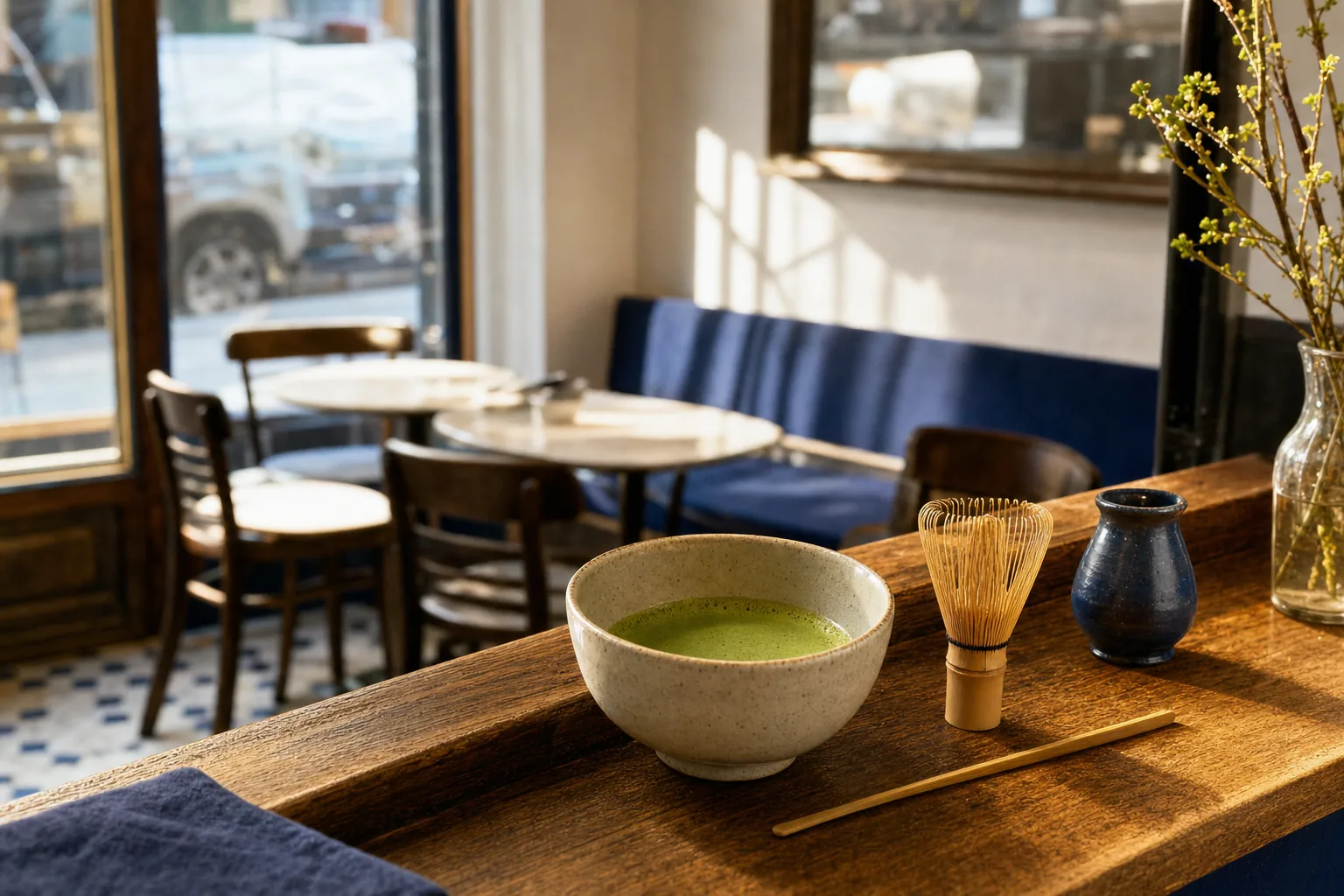
What is matcha? It’s a fine green tea powder made from specially grown leaves, then whisked into water or milk. Its vivid color and full texture come from a different growing and processing method than the one used for ordinary steeped green tea.
Here’s how matcha is grown, what its grade labels can tell you, and how to make sense of its flavor in a cup.
What Matcha Is and Where It Comes From
Matcha is powdered green tea. The leaves are shade-grown, processed into a material called tencha, then ground into a fine powder. When you drink matcha, the powder stays in the cup. It isn’t removed like tea leaves after steeping.
That difference gives matcha a fuller feel than a clear green tea infusion. It also means the powder’s own flavor and texture are part of every sip. The tea plant is Camellia sinensis, the same species used for other familiar teas. What changes is how the leaves are grown and handled.
Powdered tea has a long history in East Asia. Earlier methods of grinding tea and whisking it with hot water developed in China. The practice reached Japan, where tea growers later developed the shade-growing and leaf-processing methods linked to modern matcha.
In Japan, matcha also became part of chanoyu, the formal tea gathering often translated as the way of tea. The drink is central to the preparation and sharing of tea in that setting.
Today, matcha appears in traditional bowls as well as café drinks. A whisked tea lets the powder’s own taste lead. In a latte, milk softens its edges and changes the texture. The powder’s intended use matters, which is why a matcha suited to whisking with water may not be the same one a café chooses for milk.
At Frenchy Coffee NYC in East Harlem, our matcha is bright green, with a fresh, vegetal taste and gentle bitterness. We whisk it to order and serve it as a latte, a common café preparation. That gives local readers a useful example of matcha as a drink ingredient, not just a tea ceremony staple.
How Matcha Is Grown and Made
Matcha’s taste begins in the field. Tea plants intended for tencha are covered before harvest to limit direct sunlight. In common Uji growing practice, that shade period lasts around two to three weeks. The shade affects how the leaves grow and helps them retain a greener appearance and savory taste.
Growers harvest the leaves, then steam them. Steaming limits oxidation and helps preserve the leaf’s green character. After that, the leaves are dried without being rolled. This is a key difference between tencha and teas such as sencha, whose leaves are rolled during processing.
Once dry, the leaves are sorted and cleaned. Stems, veins, and coarser pieces are removed before the finished tencha is ground. The result is a fine powder. Matcha is therefore more than any green tea leaf crushed into dust; it comes from a particular leaf and production process.
That fine texture is useful in the cup: a quick whisk can spread the powder through water, though the tea remains a suspension rather than dissolving like sugar.
Blending is another part of production. A producer may combine tencha from different fields or cultivars to make a consistent flavor. A blend isn’t automatically lower quality than a single-cultivar tea. What matters to the drinker is whether the finished powder suits the way they plan to prepare it.
These steps help explain why powdered sencha and matcha can look alike yet behave differently. Sencha is processed as leaf tea, then steeped. Matcha is made from tencha and consumed as powder in the drink. The distinction starts well before a barista reaches for a whisk.
For a home cup, freshness and mixing still matter. Fine powder can form clumps if it’s packed tightly or added straight to a cold drink. Sifting before whisking can help. If you’re making a latte, first disperse the powder in a small amount of water, then add milk.
Matcha vs. Regular Green Tea
Both matcha and regular green tea come from Camellia sinensis. The main difference is what happens in the cup: brewed green tea is an infusion, while matcha is a suspension of powder in water. With brewed tea, you remove the leaves. With matcha, you drink the finely ground leaf.
That changes the feel of the drink. A cup of steeped green tea is usually clear and light on the tongue. Matcha is opaque and has more body because the powder remains in the liquid. It may settle if it sits for a while, so a quick stir or swirl brings it back together.
The flavor also tends to feel more direct in matcha. You may notice a fresh vegetal note, savory umami, or some bitterness. Steeped green tea can be lighter, but it still varies by tea type and brewing. One harsh cup doesn’t tell you how every green tea will taste.
Preparation affects both drinks. Water that is too hot or a long steep can make brewed tea taste harsh. Matcha can also turn bitter if its powder, water temperature, or concentration doesn’t suit your taste. Follow the producer’s instructions as a starting point, then adjust one thing at a time.
Caffeine is not a fixed amount across all matcha or green tea. It depends on the tea and how it’s prepared. With matcha, the amount of powder used changes the strength of the drink. Milk and ice add volume, but they don’t remove caffeine from the powder.
Choose based on the cup you want. Steeped green tea suits someone who likes a lighter drink and wants to remove the leaves after brewing. Matcha works well when you want a thicker tea or a latte with a clear green tea flavor. If you’re exploring a café version near East Harlem, our matcha latte menu near the Upper East Side describes Frenchy Coffee NYC’s whisked-to-order drinks.
For a fair taste comparison, try both without sweetener first. Then taste the matcha with the milk you usually choose. The second test shows how the powder holds up in the kind of drink you’re most likely to make.
Matcha Grades and What the Labels Mean
Words such as ceremonial, culinary, and latte-grade can help describe intended use. They don’t work as one universal quality scale. A label may reflect how a seller expects the powder to be prepared, so look at the stated use alongside the color and flavor notes.
Ceremonial matcha
Ceremonial matcha is generally meant to be whisked with water and enjoyed on its own. The flavor is often described as fresh and vegetal, with a smoother feel than powders made for cooking. If the taste of the tea itself is the point, this kind of powder is the natural place to start.
Some ceremonial matcha is associated with Uji, a tea-growing area in Kyoto. Origin can be useful context, but it doesn’t tell you everything about a particular tin. The growing season, blend, freshness, and preparation can all affect what reaches the cup.
Culinary matcha
Culinary matcha is intended for recipes such as baked goods or drinks with other strong ingredients. Its flavor may be bolder and more astringent. That strength can work well when milk, sugar, or food would soften a delicate tea’s flavor.
For example, a mild powder may get lost in a large iced latte. A more assertive one can keep a noticeable tea taste after milk is added. For baking, the other ingredients shape the result too, so a deep green color alone won’t predict the flavor of the finished recipe.
Latte or barista matcha
Latte-grade or barista matcha is described as suitable for milk-based drinks. The goal is a powder whose color and taste remain clear once milk joins the cup. Some product guidance for this category recommends water as hot as 176°F, while ceremonial matcha guidance may call for cooler water around 140°F.
Those figures are examples, not a rule for every brand. Temperature advice can differ by grade and product. Use the package directions if they’re available, and lower the heat if the tea tastes too sharp.
Specialty labels
Some sellers use names for special blends or lines, such as Emperor’s or a numbered series. These names don’t have one shared meaning across the market. Check the description for the intended preparation and flavor notes instead of assuming a special label proves a particular grade.
Color can offer a clue, but it isn’t a grading test. Bright green may suit a latte, while an olive tone can appear in culinary matcha. Lighting and the age of the powder also affect what you see. Pick by intended use first, then judge the prepared drink.
Matcha’s Flavor, Texture, Color, and Storage
Fresh matcha often has a green, vegetal aroma and a savory note called umami. Depending on the powder, it may also have a gentle sweetness or a bitter edge. These notes aren’t a guarantee based on the word ceremonial or culinary. The finished cup depends on the powder and how you prepare it.
Bitterness and astringency are related but different. Bitterness is a taste. Astringency is the drying feeling that can linger in your mouth. A matcha may have one more than the other, and a little of either can be part of its character.
The texture is different from steeped tea because the powder stays in the drink. A well-mixed cup can feel smooth and full. But matcha doesn’t dissolve completely, so some settling is normal. If the drink stands for a few minutes, stir it again before sipping.
Color can range from bright green to a more muted olive tone. The shade depends partly on the matcha and its intended use. A photo is only a rough guide; screen settings and light can change how green a powder looks. Taste and aroma are better checks once the tin is open.
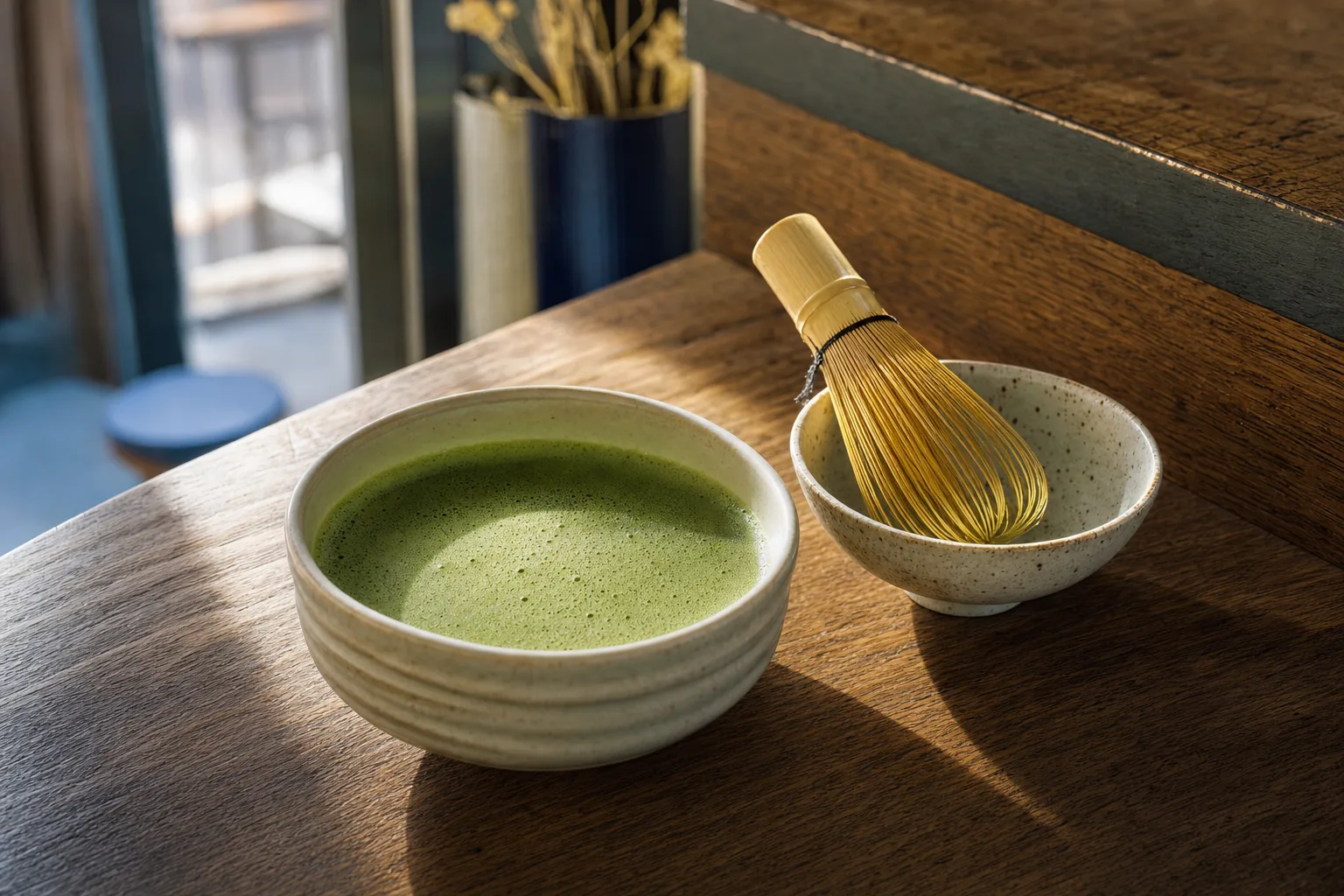
Matcha is a fine powder, so air, light, heat, and moisture can dull its color and aroma over time. Keep it tightly sealed in a cool, dark place. Use a dry spoon, and avoid leaving the tin open beside a steaming kettle or stove.
The refrigerator can help keep matcha cool, but cold storage needs care. Let a sealed container warm toward room temperature before opening it. That reduces the chance of moisture forming on cold powder when it meets warmer air.
Buy a container size that fits your routine. A daily matcha drinker may finish an opened tin sooner than someone who makes a latte now and then. If the powder has lost some brightness but still smells clean and dry, it may work better in a latte than in a plain bowl, where subtle flavor is easier to notice.
We write our seasonal matcha flavors on the chalkboard behind the counter. The seasonal drink specials page is useful if you want to see what flavor combinations may be available on a visit.
How Matcha Is Prepared and Served in NYC
Matcha can be prepared as a simple tea or mixed into a latte. For a plain cup, sift the powder if it looks clumpy. Add hot water, then whisk briskly in a back-and-forth motion until the powder is spread through the liquid. A whisk or another mixing tool can help blend it at home.
For a latte, first mix the matcha with a small amount of water. This makes it easier to break up clumps before adding milk. Then add warm milk for a hot drink, or pour the matcha mixture over milk and ice for a cold one. Taste before adding sweetener so you can judge the tea’s own flavor.
Use the product’s directions for water temperature when you have them. Guidance varies: one grade may be prepared with cooler water, while a latte powder may be made with hotter water. If your cup tastes too bitter, try cooler water or a smaller amount of powder next time. Change one factor, not several, so you can tell what helped.
A café drink follows the same basic idea, though the barista prepares it to order. At Frenchy Coffee NYC, our matcha is served for latte-style drinks. We’re at 129 East 102nd Street in East Harlem, a short walk from the 103rd Street 6 train stop.
That neighborhood setting makes matcha an easy stop during a day in Upper Manhattan. A hot latte can suit a cool morning walk. An iced one can be a refreshing pause after a museum visit or an errand along East 102nd Street. The drink itself is simple; the difference is whether you want tea-forward flavor or a softer, milk-based cup.
In New York cafés, matcha may be served with different milk choices or flavor additions, depending on the menu. Don’t assume every café prepares it the same way. If you want a less sweet drink, ask how it’s made before ordering. If you’re trying matcha for the first time, a basic latte gives you a familiar starting point.
Frenchy Coffee NYC is a family-owned French café and bakery in El Barrio. We make matcha alongside espresso drinks and pastries, so it can fit into a quick café stop. For more neighborhood details, our Frenchy Coffee NYC East Harlem page has information about the café and its location.
At home, keep the first preparation simple. Whisk matcha with water before adding milk, taste it, and adjust the next cup based on what you notice. That small routine makes it easier to find a balance you like without relying on a grade name alone.
Matcha FAQs
Is matcha the same as green tea?
Matcha is a type of green tea, but it’s prepared differently from the steeped tea most people mean by regular green tea. Matcha is ground into powder and whisked into water, so the powder stays in the drink. Regular green tea leaves are steeped, then removed. That difference affects texture and how concentrated the flavor feels.
Does matcha dissolve in water?
No, matcha doesn’t dissolve completely in water. The fine tea powder becomes suspended in the liquid when you whisk it, and some may settle if the drink sits. A quick stir brings the powder back through the cup. Sifting before mixing can help prevent clumps and make the texture smoother.
What does matcha taste like?
Matcha often tastes vegetal and savory, with a touch of sweetness or bitterness depending on the powder. It can also leave a drying sensation called astringency. In a latte, milk softens the tea’s sharper notes and gives the drink a creamier feel. Try a sip without sweetener to get a clearer sense of its flavor.
Is ceremonial matcha always better than culinary matcha?
No, the labels point to different uses more than a single universal ranking. Ceremonial matcha is generally intended for drinking with water, while culinary matcha is made for recipes or drinks with other strong flavors. Choose based on how you’ll prepare it. A powder suited to a latte may be a better fit than a delicate tea powder.
How should I store matcha after opening it?
Keep opened matcha sealed in a cool, dark place, and use a dry spoon. The refrigerator can help, but let the sealed tin warm before opening it to limit condensation. Heat, light, air, and moisture can dull the powder’s color and aroma. A container that matches how often you drink matcha can also help you use it while it’s fresh.
Conclusion
Choose matcha by the drink you want: a water-whisked tea calls for a different flavor balance than a latte. If you’re in East Harlem, stop by Frenchy Coffee NYC at 129 East 102nd Street and try our matcha in a café-style drink.