 Frenchy Coffee
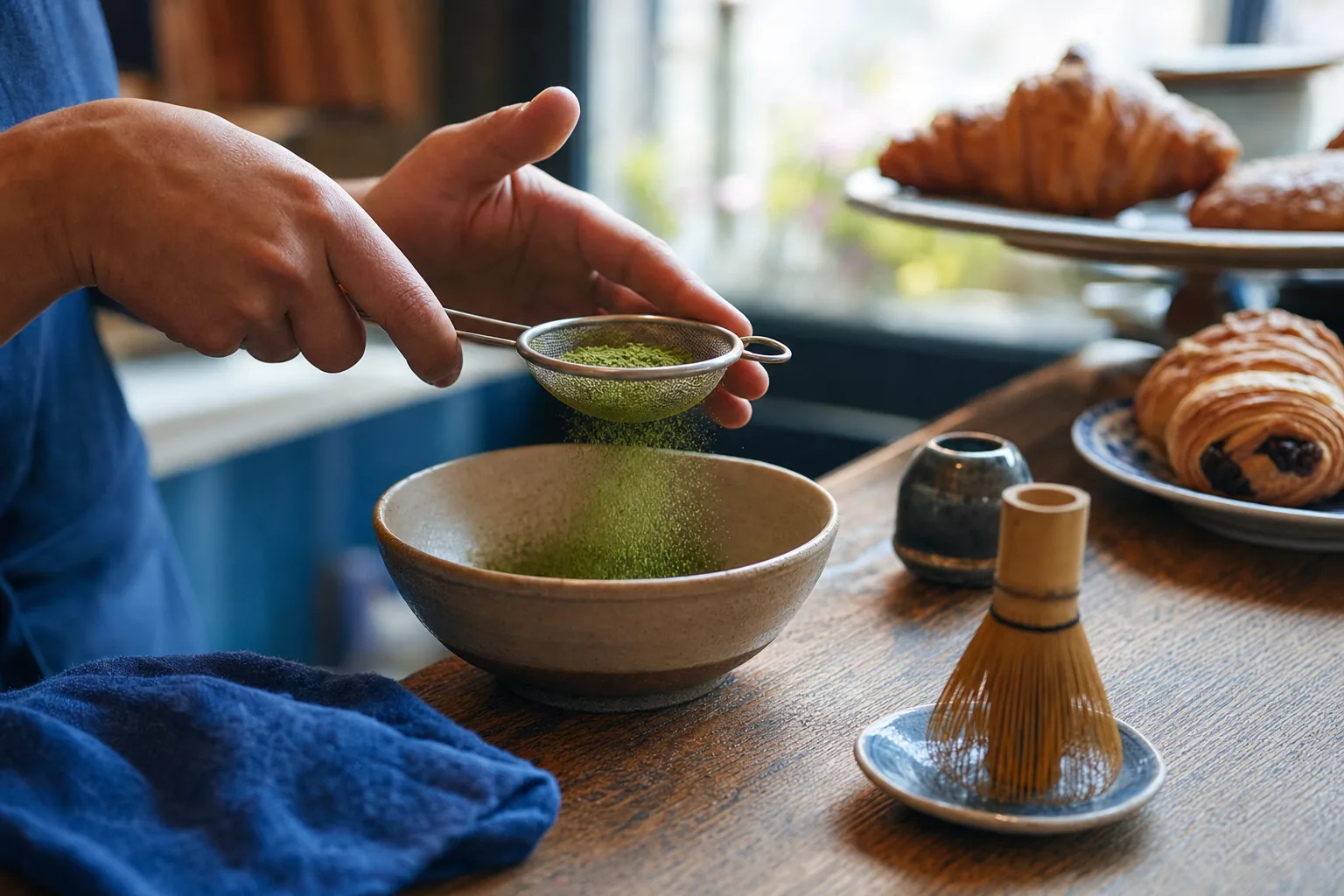
A smooth matcha latte starts with one small step: whisk the powder with water before adding milk. That keeps the drink from turning gritty, whether you like it hot or poured over ice.
We serve matcha whisked to order at Frenchy Coffee NYC in East Harlem. At home, you can use the same simple order: measure, sift, whisk, then add milk.
Step 1: Gather Matcha, Milk, Water, and Tools
Goal: Set out the ingredients and tools before you heat anything. For one cup, start with about 2 grams of matcha, 30 milliliters of water, and 150 milliliters of milk. That makes a balanced drink with a clear tea flavor. Adjust the milk after tasting.
A matcha latte is matcha powder whisked with water, then mixed with milk. It has no coffee in it. Matcha is finely ground tea, so its particles stay in the drink rather than being strained out like brewed tea leaves.
Use matcha sold for drinking, rather than ordinary green tea ground at home. For background on matcha, see this overview of tencha leaves.
For a milk drink, you don’t need a costly tea just because a package uses the words ceremonial grade. Those grade labels aren’t a shared official standard. Read the maker’s description and choose a powder meant for drinking. A clean, fresh-tasting powder matters more than a fancy name on the tin.
Choose the milk you like. Dairy milk gives the drink a familiar creamy taste. Unsweetened plant-based milk can work too; taste and foam vary by type and brand. If you want a vegan version, use a plant-based milk and a sweetener that fits your diet. Check the package if you’re unsure.
Set out a small bowl or wide mug, a fine sieve, and a whisk. A bamboo matcha whisk, called a chasen, gives you room to whisk briskly. A small electric frother can mix the powder if you don’t have one. For milk, use a separate frother, a small whisk, or a French press.
In East Harlem, we whisk our matcha to order, with flavors that change with the seasons. If you’re near 102nd Street, you can see the matcha we make at our café before trying the recipe at home.
Step 2: Measure and Sift the Matcha
Goal: Break up packed powder before it touches water. Measure about 2 grams for a regular cup. If you don’t have a kitchen scale, a level teaspoon is a useful rough guide, but spoon size and how you fill it can change the amount.
Put a fine sieve over your bowl or mug. Add the matcha and tap the sieve gently until the powder falls through. If a few bits cling to the mesh, press them lightly with the back of a dry spoon. Don’t force larger lumps through; they’re likely to make the drink harder to smooth out.
Matcha is very fine, so moisture and pressure in the tin can make it clump. Sifting spreads the powder out before you add liquid. It takes only a few seconds, and it’s easier than chasing dry pockets around a full cup of milk.
If you’re making more than one serving, sift each measured portion into the bowl you’ll use for whisking. That helps you keep the amount steady from cup to cup. For a stronger drink, change the matcha amount a little at a time. Keep the water and milk the same for your next try so you can tell what changed.
Keep the tin closed between scoops. Use a dry spoon, then seal the container again. Matcha can lose its fresh aroma if it sits exposed to air, light, or damp. If the powder looks dull or smells flat, adding more to the cup won’t bring back its fresh taste.
The goal here isn’t to make a perfect powder cloud. Just make sure you don’t see a dense lump sitting on the sieve. A few flecks may remain, but most of the measured matcha should pass through.
Step 3: Whisk the Matcha Until Smooth
Goal: Make a smooth, concentrated matcha base before you add milk. Pour about 30 milliliters of warm water over the sifted powder. Water around 160 to 175°F is a useful starting range. Very hot or boiling water can bring out a harsh taste.
Hold the bowl steady. With a bamboo whisk, move your wrist quickly in a W or zigzag shape across the bowl. Don’t stir in slow circles. Keep the whisk near the bottom at first, then lift it closer to the surface as the powder disperses. Whisk for about 15 to 20 seconds, until the color looks even and the surface has a light foam.
Use a light grip. The whisk should move quickly, but you don’t need to press hard against the bowl. If you have a new bamboo whisk, wet its tines briefly before use. That makes them more flexible while you whisk.
No bamboo whisk? A small electric frother can mix the powder and water. Keep its head under the surface to limit splashes. A jar with a tight lid can work too: add the powder and water, close it securely, then shake. Open it away from your face. A spoon alone is usually too slow to break up the powder evenly.
Matcha doesn’t dissolve in water like instant drink mix. The goal is to spread the fine tea particles through the liquid. Some settling is normal, so give the drink a quick stir if it sits for a while.
Check the bottom of the bowl before moving on. If you see dry specks or a lump, whisk again while the base is still small and easy to work with. More milk won’t fix a clump; it only makes the clump harder to find.
Step 4: Warm and Froth the Milk
Goal: Warm the milk enough to feel hot and creamy without boiling it. For one cup, heat about 150 milliliters. On the stove, use a small pan over low or medium-low heat and stir now and then. In a microwave, heat in short bursts and check between them.
Stop when the milk is steaming, with small bubbles near the edge. If you use a thermometer, about 150°F is a useful target. Don’t let it boil. Boiled milk can taste cooked and tends to make flat foam.
To froth the warm milk, use a handheld frother or whisk. If you have a French press, pour in the warm milk and pump the plunger several times until you see foam. Leave room in the press because the milk will rise as air gets mixed in.
Use a separate tool from the one you used for the matcha base, or rinse the whisk well first. You’re looking for small, even bubbles, not a stiff cap of foam. If you don’t want foam, warm the milk and pour it in as is. The drink will still be creamy.
Different milks foam in different ways. Dairy milk often gives a creamy texture. Plant-based types vary, and some are made to froth. Try the milk you already enjoy and judge it by the taste and texture in your cup. For an iced drink, use cold milk instead of warming and frothing it.
Pouring is easier if you keep the milk in a small pitcher or measuring cup with a spout. You can also use the saucepan carefully. If you want foam on top, hold some back with a spoon as you pour, then add it at the end.
Frenchy Coffee NYC whisks its matcha to order. At home, the same principle applies with your milk of choice: get the matcha smooth first, then add milk. That order gives you more control over both texture and strength.
Step 5: Assemble a Hot or Iced Matcha Latte
Goal: Combine the smooth base with milk, then taste before you sweeten. For a hot cup, pour the whisked matcha into a mug. Add the warm milk slowly and stir. If you saved foam, spoon it on top.
For a simple finish, pour the milk steadily into the center of the matcha. If you want to try latte art, begin with a smooth, glossy layer of foam rather than large bubbles. Hold the cup at a slight angle and pour from a little height to mix the milk with the tea. As the cup fills, bring the pitcher closer to the surface and pour more slowly.
Don’t worry if the first attempt looks like a swirl rather than a heart. Latte art takes practice, and matcha’s green color can make the pattern look different from coffee. Keep the milk foam fine and the pour calm. A quick shake or a few big bubbles will blur the design.
For an iced version, whisk the matcha with warm water as usual. Fill a tall glass with ice, add cold milk, then slowly pour the matcha base over it. The layers may look distinct at first. Stir before drinking so the tea is spread through the milk.
Don’t pour dry matcha into cold milk. It can stick together before you have a chance to break up the lumps. Whisking with water first works for both hot and cold drinks. For iced drinks, liquid sweeteners tend to mix more easily than granulated sugar.
Ice changes the drink as it melts. If you want the tea flavor to stay clear, make the matcha base a little stronger or use less ice. Change one part at a time, then see how the cup tastes after you stir it.
For a vegan cup, use plant-based milk and a sweetener that works for you. If you’re adding syrup, taste the milk and matcha first. Some milks are naturally sweet, and a sweet syrup can cover the tea’s flavor.
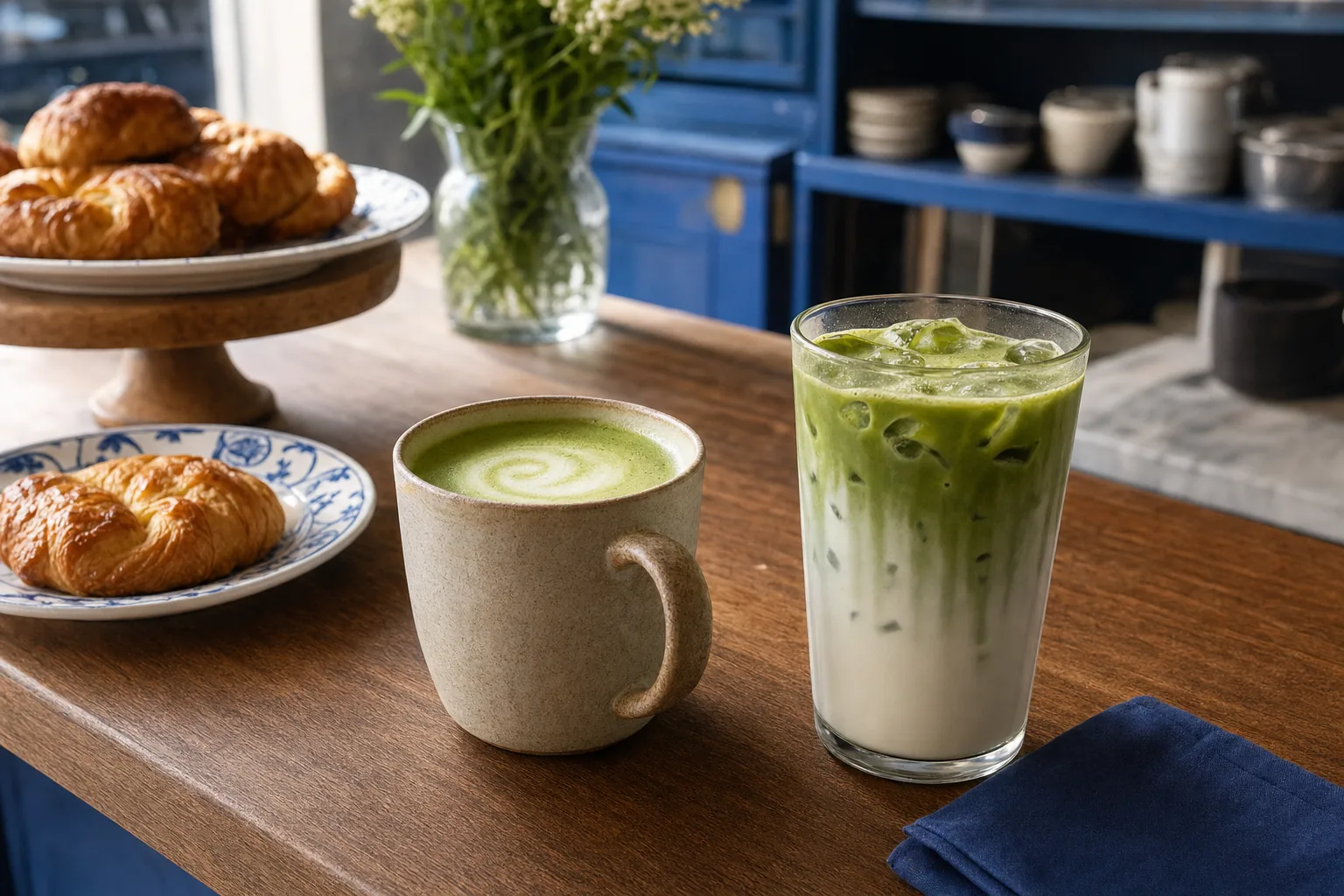
At Frenchy Coffee NYC, we whisk matcha to order at our East Harlem café. If you’re trying a matcha drink nearby, our seasonal drink board can help you see what flavors are in rotation.
Step 6: Adjust the Flavor and Fix Common Problems
Goal: Work out what you want to change before adding more ingredients. Taste the drink once it’s mixed. Then adjust one thing, such as the amount of milk, matcha, or sweetener. Changing several at once makes it hard to learn what helped.
It tastes too bitter
First, check the water. If it was boiling, let it cool a little before your next cup. Then check the amount of matcha. Too much powder can make the drink sharp, especially if you use less milk. Try the same recipe with slightly less powder and taste again.
Matcha has a natural green, slightly bitter taste. Milk may soften it, but it won’t make every powder taste sweet. If the tea still tastes harsh, the powder itself may not suit your preference or may have lost freshness. A ceremonial grade label by itself can’t promise a flavor you’ll like.
It has lumps or feels gritty
If you see lumps, the powder may not have been sifted, or it may have met milk before water. For the next cup, sift it first and whisk it with a small amount of water. Check the bowl before adding milk. For an iced drink, make the same smooth base before pouring it over ice.
It tastes weak
Use less milk before you increase the matcha. Too much milk can cover the tea’s flavor. If the drink is still too mild, add a small amount more matcha next time and keep the other amounts steady. Ice also dilutes the cup as it melts, so taste an iced version after stirring.
The foam is flat or too bubbly
Milk that boiled may not foam well. Warm it until steaming instead. If the foam has large bubbles, tap the pitcher gently on the counter and swirl it before pouring. A little foam is enough; the goal is a creamy drink, not a stiff mound.
Does matcha have health benefits?
Matcha is powdered green tea, and it contains caffeine. That doesn’t mean a latte has a proven health effect. Evidence about green tea and specific health outcomes varies, and claims about concentrated supplements don’t automatically apply to a drink.
If you’re watching your caffeine, remember that the amount in a cup varies with the powder and how much you use. You can make a milder drink with less matcha, but it will also have less tea flavor. If caffeine affects your sleep or health, ask a qualified health professional what’s right for you.
FAQ: Matcha Latte Questions
What’s the basic ratio for a matcha latte?
A useful starting point is about 2 grams of matcha, 30 milliliters of water, and 150 milliliters of milk. Whisk the matcha with the water first, then add milk. Treat those amounts as a starting recipe, not a rule. Use less milk for a stronger tea taste, or adjust the matcha a little after tasting.
Can I make a matcha latte without a bamboo whisk?
Yes, you can use a small electric frother or shake matcha and water in a tightly closed jar. Sift the powder first, then mix it with water before adding milk. A spoon can stir the drink, but it may leave clumps. Open a shaken jar carefully and away from your face.
How do I make an iced matcha latte?
Whisk sifted matcha with a little warm water until smooth. Pour cold milk into a glass filled with ice, then add the matcha base. Stir before drinking. Don’t add dry powder straight to cold milk, since it can clump. If melting ice waters down the flavor, use a little less ice or more matcha next time.
Can I make a vegan matcha latte?
Yes. Replace dairy milk with a plant-based milk and use a sweetener that suits your diet. The taste and foam depend on the type and brand, so start with one you already enjoy. For an iced version, pour it in cold. For a hot cup, warm it gently and stop before it boils.
Does a matcha latte have caffeine?
Yes, matcha contains caffeine, so a drink made with it does too. The amount depends on the powder and the portion you use. A smaller amount of matcha makes a milder cup, though it won’t remove all caffeine. If you need to limit caffeine for a health reason, get advice from a qualified professional.
Conclusion
Keep the order simple: sift the matcha, whisk it with warm water, then add milk. If you’re in East Harlem, stop by Frenchy Coffee NYC at 129 East 102nd Street to try our whisked-to-order version.