 Frenchy Coffee
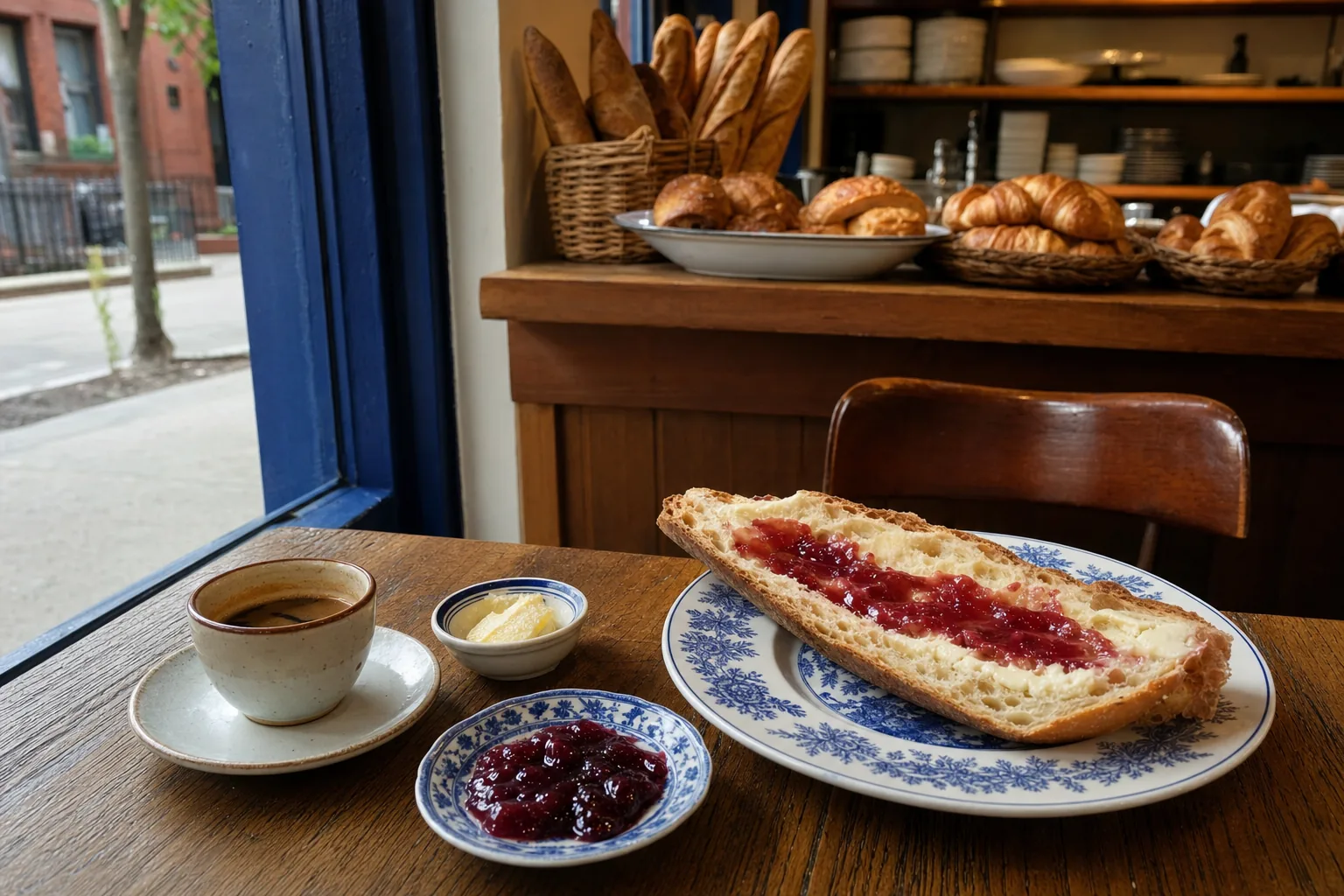
A French breakfast can be as simple as a warm drink and a piece of bread with butter and jam. Pastries may join the table, but the meal is usually lighter than the hearty egg-and-meat breakfasts many Americans know.
Here’s what you’ll find at home, what changes at a café, and how to enjoy a French-inspired morning in East Harlem.
We analyzed 6 English-language pages (Tasting Table, Food Republic, Taste France, Chef Denise, Our Escape Clause, Izzy Cooking) about French breakfast and found that 0 of 6 cover where to find one in a New York neighborhood. Only 1 of 6 names kouign amann.
What Does a French Breakfast Usually Include?
In French, le petit déjeuner means the first meal of the day. A typical version is modest: bread or a pastry, a hot drink, and sometimes juice. The exact mix depends on the person, the household, and how much time there is before work or school.
A tartine is a common starting point. It’s a slice of baguette, often cut lengthwise, with butter and jam. Some people reach for a croissant or pain au chocolat instead. Others choose brioche, a soft, rich bread that can be eaten plain or toasted.
French breakfasts are often sweet, but that doesn’t mean every morning includes a pastry. A piece of bread with a spread can be enough. The meal is often quick, leaving room for lunch to be the day’s more substantial meal.
That simple pattern is a useful guide, not a rule. Some people eat at home, while others stop at a bakery or café. A hotel breakfast may have more choice, and a weekend brunch can look quite different from an ordinary weekday morning.
A traditional French breakfast may include baguette or toast with butter, jam, or honey, along with pastries and a hot drink. Examples include croissants, pain au chocolat, brioche, and pain aux raisins.
For anyone near East Harlem, the idea translates well to a simple café order: pick a pastry or bread, then add coffee or another morning drink. At Frenchy Coffee NYC, a family-owned French café at 129 East 102nd Street, we serve pastries made in the café alongside coffee drinks. Our croissants aren’t made in-house, so it’s worth distinguishing them from the other pastries we prepare on site.
People looking for a local morning stop can see our breakfast options near the Upper East Side. The basic idea stays the same: a small bite, a hot drink, and time to enjoy them.
Bread, Pastries, and Simple Toppings
Bread gives the meal its shape. A baguette can be served fresh or lightly toasted, then topped with butter, jam, or honey. That’s a tartine. It takes little prep and works at home or at a café counter.
There’s room to change the spread without changing the basic idea. A sweet jam makes the bread feel like a treat, while butter alone keeps the flavor simple. Chocolate spread is another option. Some people dip bread into a hot drink, a small habit that can surprise anyone who expects bread to stay crisp.
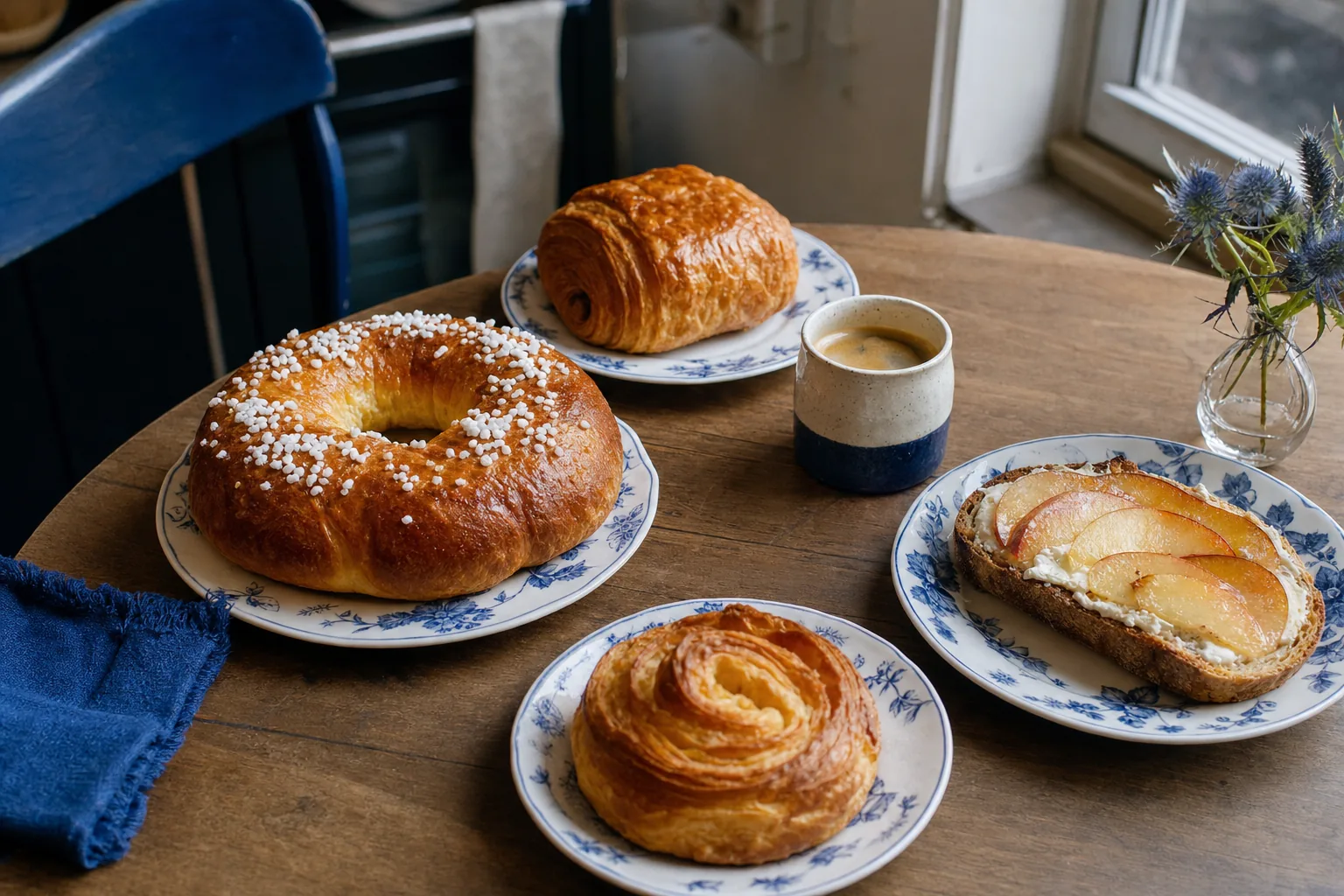
Pastries add more choice, but they aren’t all the same. A croissant is flaky and buttery. Pain au chocolat has chocolate tucked inside its pastry. Pain aux raisins is rolled with raisins, while a chausson aux pommes is an apple-filled turnover. Brioche is softer and less crisp, and it can be served plain or toasted.
These baked goods are often bought fresh rather than made at home. That makes a bakery stop part of the morning routine for some people. In New York, a French-style bakery can bring those familiar shapes and flavors into a fast city morning, even if the daily customs around them differ.
Frenchy Coffee NYC makes pastries and savory bakes in the café, many from family recipes. Our croissants are an exception and aren’t made in-house. If you want to see the food choices in one place, our food menu covers the café’s current offerings.
A French-inspired breakfast doesn’t have to be elaborate. Try one pastry with coffee, or split a baguette and set out butter and jam. That’s enough to bring the key flavors to the table without turning breakfast into a long cooking project.
Sweet bread and pain perdu
Pain perdu, often called French toast in the United States, is another way to use bread at breakfast. It’s more likely to show up as a brunch dish or a home-cooked treat than as the everyday tartine. Brioche can also make a soft, sweet base for a special morning meal.
For a weekday, keep it plain. Save a cooked dish for a slower morning when you have time to sit down. And if you’re ordering a croissant, enjoy it as a pastry rather than assuming it’s the same as a full breakfast plate.
Coffee, Hot Chocolate, and Other Morning Drinks
The drink is a big part of the meal. Coffee may be served with milk as café au lait, or on its own as espresso or café noir. Tea is another option. Some people choose juice as well, especially with bread or a pastry.
Café au lait means coffee with milk. At home, the balance can vary with taste and the way the coffee is made. In a café, it may be served in a cup or a larger vessel. The key point is simple: coffee can be the main drink, not just something on the side.
Frenchy Coffee NYC serves espresso drinks along with matcha and other drinks. Our menu includes drip coffee, café au lait, Americano, espresso, and macchiato. Check the coffee and drink menu for the current selection and listed prices.
Hot chocolate has a place at the morning table, too. It’s a familiar choice for children and adults alike. Some people dip bread into the drink, which softens it and brings the chocolate flavor into each bite. If you prefer a crisp pastry, keep it on the plate and sip between bites.
These pairings can change the feel of breakfast. A small espresso with a pastry is quick. A large milky coffee with tartine invites a slower pace. Hot chocolate turns the meal sweeter, while tea can keep it lighter.
A simple café au lait at home
You don’t need special tools to make a home version. Brew a cup of coffee, warm milk, then pour the milk into the coffee to suit your taste. If you prefer a stronger drink, use less milk. If you want a softer flavor, add more.
It won’t taste exactly like every café version, since coffee strength and milk texture vary. But it gives you the basic pairing: coffee softened with milk, served beside bread or pastry. For breakfast, that’s often all you need.
Breakfast at Home and at a French Café
At home, the meal can be as quick as pouring coffee and spreading jam on bread. A household may keep the same routine each morning, or change it based on what’s in the kitchen. A pastry from a neighborhood bakery can stand in for cooking when the day starts early.
A café changes the setting more than the basic meal. You can order a drink and pastry, sit for a short break, or choose something more filling if the menu has it. In France, the traditional breakfast remains a light meal, but café menus and weekend brunches can add savory dishes.
That difference matters when you’re choosing what to order. A croissant and coffee make a small breakfast. A quiche or an omelette is a more substantial choice, and it may fit better when you want a savory meal. Don’t assume every café serves the same mix. Check the menu and opening hours before making a special trip.
Breakfast routines can vary over time and from one household to another. Bread, pastries, and hot drinks are familiar choices today, but there is no single routine that suits every morning.
Sharing a meal can make breakfast feel more social, though weekday routines are often simpler than special occasions. The pleasure of eating together can matter as much as the menu.
In East Harlem, a café stop can fit into a commute or a morning errand. Frenchy Coffee NYC is open seven days a week, with weekday and weekend hours that differ. We also prepare savory bakes in the café, so someone who wants more than a pastry can look beyond the sweet case.
Frenchy Coffee NYC also handles office and event catering. The menu includes pastry boxes, mini quiches, sandwich platters, and coffee by the gallon, with boxes from $30. Many of our catering orders go to teams at Mount Sinai Hospital next door. That’s a different kind of morning meal: one planned for a group rather than a single café visit.
The right setting depends on the day. At home, keep it easy. At a café, choose the pace and portion that suit your morning. For a group breakfast, plan ahead and review the catering details before placing an order.
How French Breakfasts Vary by Household and Region
There isn’t one breakfast that every French household eats. Some people want coffee and toast, while others reach for a pastry or hot chocolate. Children may have a different routine from adults. Work hours, appetite, and what’s close by can all shape the meal.
Even so, the simple bread-and-drink pattern is widely recognized. Regional food traditions show up more clearly in the baked goods and toppings than in a completely different breakfast formula. A region’s well-known specialty may appear at breakfast, though it isn’t necessarily an everyday choice for every household.
In Alsace, kougelhopf is a tall, ring-shaped brioche with almonds and dried fruit. Brittany is known for kouign amann, a rich pastry with a caramelized crust. In Provence and along the Côte d’Azur, a tarte Tropézienne combines brioche with cream. These specialties show how a basic pastry habit can take on local character.
Normandy gives a different example. A tartine with Camembert can make breakfast savory, while teurgoule, a baked rice pudding with cinnamon, is a sweet local dish. The names and ingredients change by region, but the broader pattern still leaves room for bread, pastry, and a warm drink.
Households also vary in how much time they spend at the table. A quick weekday breakfast might be eaten before leaving home. On a slower weekend, people may sit together longer or add brunch dishes. A family may keep a favorite bread-and-chocolate pairing for years, while another person may prefer coffee and a plain tartine.
These differences are a reminder not to treat one version as the only authentic one. The light meal is a useful guide, not a test. A savory tart or an American-style brunch doesn’t erase the French influence; it simply belongs to a different setting or a modern mix.
At a French-inspired café in Manhattan, regional specialties may share space with newer ideas. Frenchy Coffee NYC brings a French café point of view to East Harlem, while serving a menu shaped for a New York neighborhood. It’s a handy way to taste familiar French-style morning flavors without expecting every detail to match a home in France.
Finding a French-Inspired Breakfast in East Harlem
East Harlem, also called El Barrio, has its own food culture and daily rhythm. A French-inspired breakfast here doesn’t need to copy a meal in France exactly. It can start with a pastry and coffee, then make room for local routines and the time you have before work, school, or a visit nearby.
Frenchy Coffee NYC is at 129 East 102nd Street, between Park and Lexington Avenues. The family-owned café was founded by Perrine and Aurélien, who come from Évian-les-Bains in the French Alps. That background shapes the café’s French identity, while its East Harlem address makes it part of a New York neighborhood.
For a quick morning stop, choose a pastry and a drink. If you’re in the mood for a less familiar pastry, the café also serves croffles. Matcha is another drink choice, though it isn’t a traditional part of a French breakfast. That mix of French café staples and newer flavors suits the way food changes when it moves between places.
Pastries and savory bakes made in the café include items from family recipes. Croissants are available, but they aren’t made in-house.
If you’re near Mount Sinai Hospital or walking through the area, the café can be a neighborhood stop for coffee and a bite. It’s also useful to know that the café offers catering for offices and events, with boxes from $30. Many of our catering orders go to teams at Mount Sinai Hospital next door. Catering is planned separately from a walk-in breakfast, so check the menu and timing before ordering for a group.
Frenchy Coffee NYC is open Monday through Friday from 7 am to 5 pm, and Saturday and Sunday from 8 am to 4 pm. You can also get delivery through Uber Eats. For the café visit, come by at 129 East 102nd Street and choose a drink with something to eat.
French Breakfast FAQ
What is a typical French breakfast?
A typical French breakfast is often a light meal of bread or pastry with a hot drink. Tartine with butter and jam is a familiar choice, as are croissants and pain au chocolat. Some people add juice. What’s served can vary by household, and a café or weekend brunch may include more filling dishes.
Do people in France eat eggs for breakfast?
Some do, but eggs aren’t a defining part of the simple French breakfast. A weekday meal is often based on bread, pastry, and a drink. Eggs may appear on café or brunch menus, and a more savory meal can be a good choice when you want something filling.
What do French people drink with breakfast?
Coffee is common, served with milk as café au lait or on its own as espresso. Tea and hot chocolate are other options, and some people have juice. The drink often shapes the meal: coffee with a tartine is simple, while hot chocolate makes the breakfast sweeter.
Is a French breakfast sweet or savory?
A French breakfast is often sweet, with bread, jam, or pastry. Savory choices exist, especially at cafés and during brunch, but they aren’t the only or default model. A tartine with butter and jam is a straightforward example; a quiche or omelette makes a heartier alternative.
Where can I get a French-inspired breakfast in East Harlem?
Frenchy Coffee NYC is a family-owned French café and bakery at 129 East 102nd Street in East Harlem. We serve coffee drinks, pastries made in the café, and other breakfast choices. The café is open seven days a week, with shorter hours on weekends. You can visit in person or order delivery through Uber Eats.
Conclusion
For a French-inspired morning, keep the meal simple: pair bread or a pastry with a drink, then add more if you’re hungry. In East Harlem, stop by Frenchy Coffee NYC at 129 East 102nd Street and choose a breakfast that fits your day.