 Frenchy Coffee
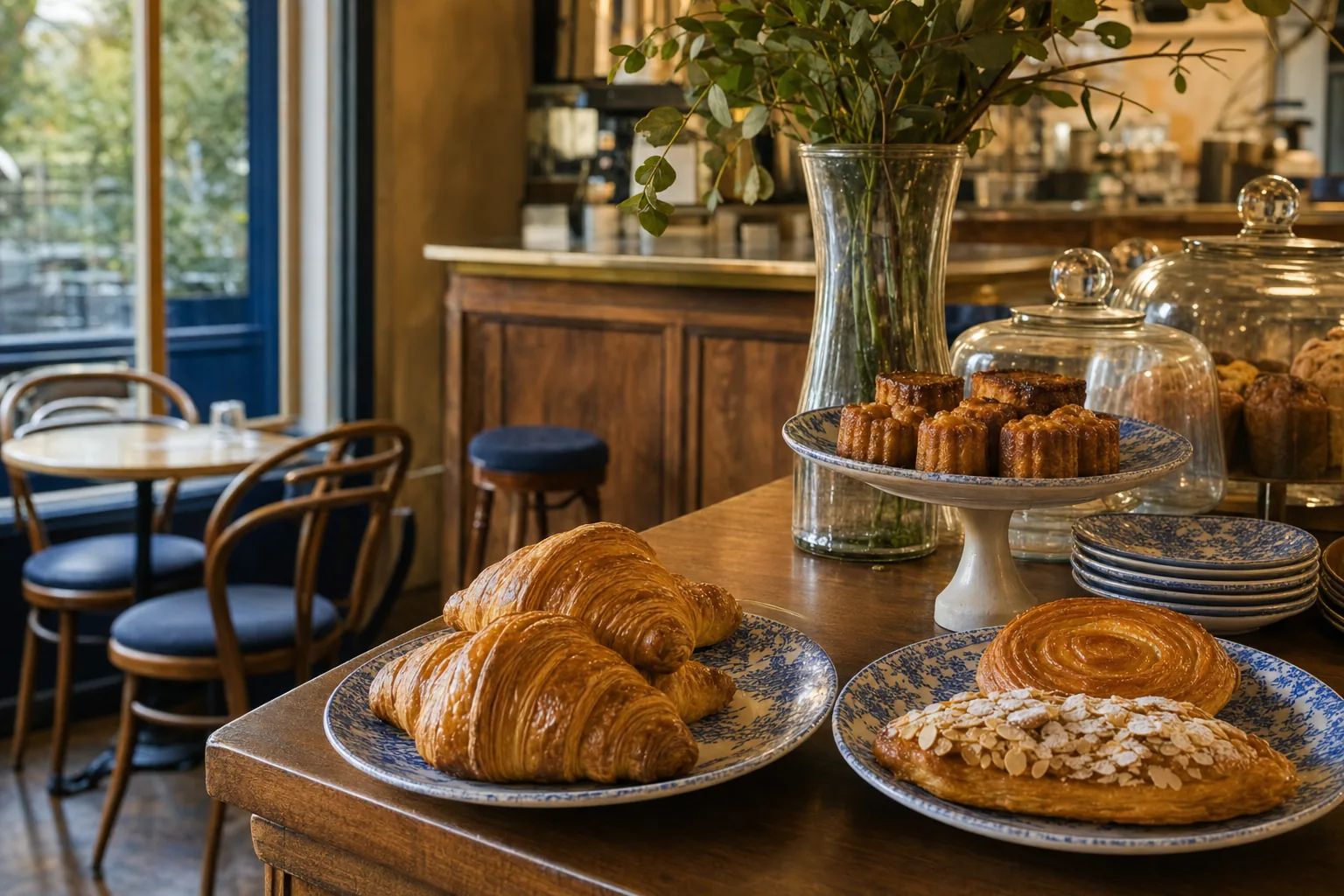
The Conservatory Garden in Central Park feels worlds away from Fifth Avenue, even though its entrance sits right beside it. Inside, three distinct garden styles surround fountains, formal paths, and plantings that change with the seasons. We at Frenchy Coffee NYC put together the key details so you can plan a visit, find the main sights, and choose a nearby East Harlem stop.
Where Conservatory Garden Is and How to Find It
Conservatory Garden is at Fifth Avenue and 105th Street, on the east side of Central Park. The main entrance is the Vanderbilt Gate, an ornate iron gate set along Fifth Avenue. Look for it between East 104th and East 105th Streets.
The gate once stood at the mansion of Cornelius Vanderbilt II. After the mansion was demolished, the gate was donated to the city and later installed at the garden. The Vanderbilt Gate’s history in Central Park gives a little context to the entrance you’ll pass through.
The garden is free to enter and open daily from 8 a.m. until dusk. Dusk shifts with the season, so don’t plan around a fixed closing time. If you’re meeting someone, agree on the Vanderbilt Gate as your landmark rather than a spot somewhere inside the park.
The 6 train stops at 103rd Street. Check current transit options before setting out, and allow time to walk through the park or along Fifth Avenue to reach the entrance.
Wheelchair access is available at the 106th Street gate inside the park. Since the main entrance is on Fifth Avenue, visitors who need this access point should plan a route to that gate before arriving. Current path conditions can also affect the easiest way through the garden.
The garden sits close to East Harlem, also known as El Barrio. If you’re making a longer day of it, the East Harlem neighborhood guide can help you plan time beyond the park. Keep the garden’s dusk closing time in mind when choosing what to see first.
The Three Garden Sections at a Glance
The six-acre garden has three sections with distinct styles. The North Garden takes cues from French formal gardens. The central section follows Italianate design, while the South Garden has an English-style layout. Moving between them is part of the visit: each has a different shape, focal point, and seasonal feel.
Use this quick comparison to decide where to linger. If spring flowers are your main draw, look for tulips in the North Garden and crabapple blooms around the center. The South Garden’s beds change through the year, so it can feel different on repeat visits.
| Section | Garden style | Main feature | Seasonal detail |
|---|---|---|---|
| North Garden | French | Untermyer Fountain and the Three Dancing Maidens | Tulips in spring; Korean chrysanthemums in fall |
| Central Garden | Italianate | Central lawn, fountain, and wisteria pergola | Crabapple trees flower in spring |
| South Garden | English | Burnett Fountain beside a water-lily pool | Planting beds shift with the seasons |
The garden opened to the public in 1937. Before that, the site had a glass conservatory used for plant displays and park growing work. The layout is formal, but the displays aren’t static. The displays change with the seasons, so a spring visit and a fall visit show different sides of the same paths.
A major restoration was completed in 2025. The work included repairs to paths and drainage, fountain updates, and new crabapple trees. Those changes matter as you walk: restored paths and renewed plantings help protect the garden’s structure while keeping the old design visible.
For a wider Fifth Avenue day, you can pair the garden with a museum visit. Our Museum Mile NYC route and visitor tips cover nearby options and transit planning. Pick one or two stops rather than trying to fit the whole avenue into a short garden visit.
North Garden: French-Inspired Symmetry and Fountain
The North Garden is the most formal of the three sections. Its balanced beds and central fountain reflect French garden design. The main focal point is the Untermyer Fountain, where three bronze figures called the Three Dancing Maidens stretch their arms toward one another above an oval pool.
The figures were made by German sculptor Walter Schott. The Untermyer family first displayed the sculpture at their estate in Yonkers, then their children donated it to Central Park in memory of their parents. It was placed in the North Garden and dedicated in 1947.
Look beyond the bronze figures. Elliptical beds and clipped shapes frame the fountain, giving the section its clear, ordered feel. The beds are replanted for seasonal displays, so the color and texture around the pool change over the year.
Spring is the season for tulips here. In fall, Korean chrysanthemums bring a different kind of display. These are seasonal highlights, not a guarantee of exact bloom dates; weather and garden conditions affect when flowers appear. If a particular bloom matters to your visit, check a current garden update before you go.
The fountain also makes a useful point of orientation. From the gate, walk through the center and then turn toward the North Garden to find it. Take time to view the planting pattern from more than one path. The design reads best when you can see how the beds curve around the fountain rather than focusing only on the sculpture.
Photographers may find the repeated shapes and fountain create a strong frame, especially when flowers are in bloom. Be mindful of other visitors and keep paths clear. The garden is a public space, not a private photo set, so a quiet moment may be easier to capture than a completely empty scene.
For a short visit, this is a good section to prioritize if you want a clear example of formal French-inspired design. For a slower walk, compare its symmetry with the more relaxed planting in the South Garden.
Central Garden: Italian Design and Wisteria Pergola
The Central Garden follows Italian Renaissance design. A lawn sits at its heart, bordered by clipped hedges and crabapple trees. A fountain marks one end, while a curved wrought-iron pergola stands behind it. In spring, the flowering trees and wisteria add color above the garden’s strong lines.
This section feels different from the North Garden. The North Garden draws your eye to its fountain and patterned beds. In the center, the lawn gives the view more open space. Stand near one end and look along the rows of crabapple trees to see how they frame the lawn and pergola.
The wisteria pergola is a natural place to pause, but bloom timing varies. A spring visit may bring flowers overhead, while another date can show the ironwork and garden structure more clearly.
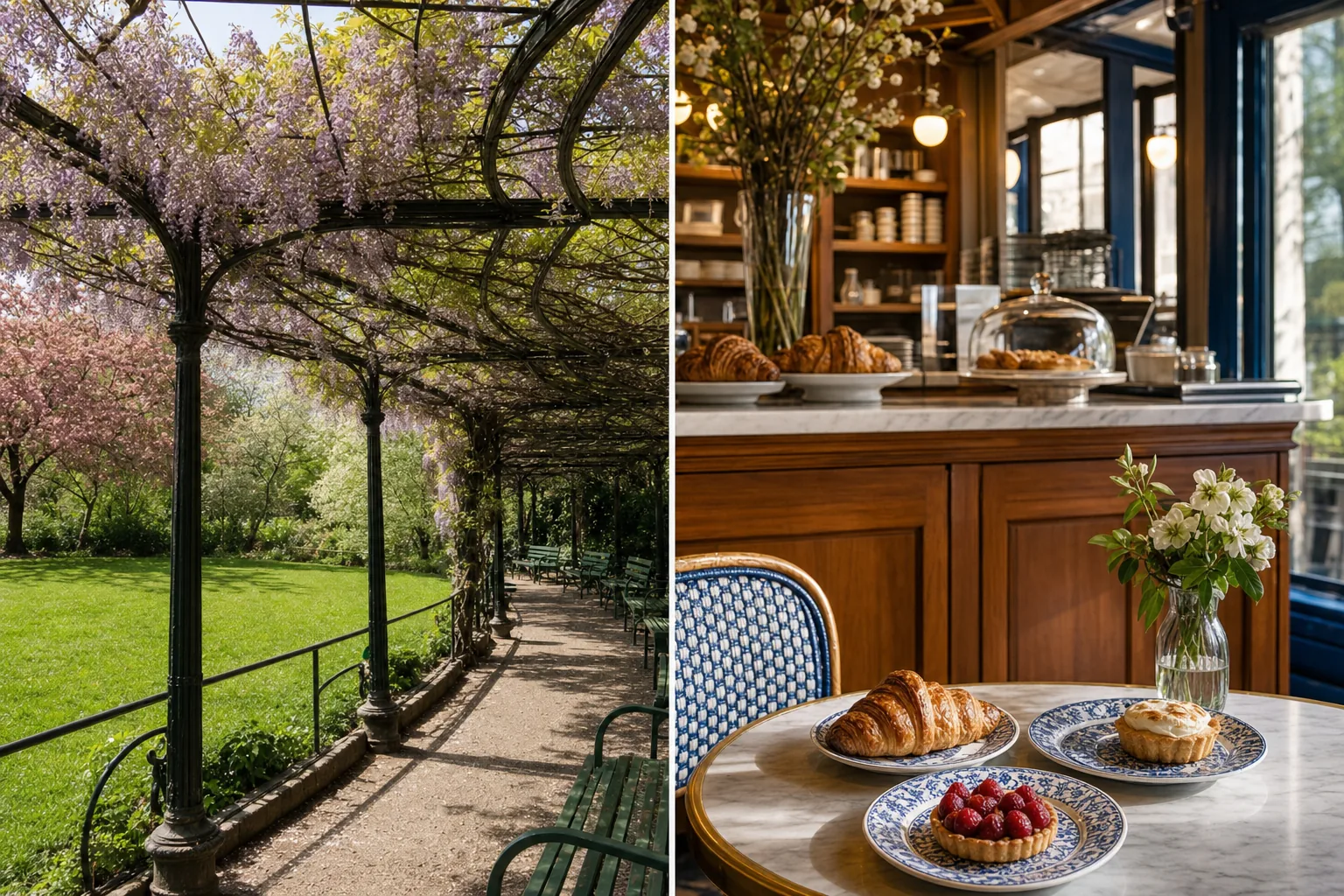
The garden can host wedding, proposal, or photography sessions. Permission to hold weddings can be arranged by calling (212) 360-2766 or (212) 860-1382.
The garden remains open to the public during permitted events. Visitors may be asked to avoid the immediate event area, so a ceremony can change how you move through a small part of the grounds. If you’re planning an event, review the current rules before setting a date or inviting guests.
For a casual visit, take the path around the lawn, then look back toward the pergola. That view shows the section’s balance of open grass, repeated tree lines, and curved ironwork. It’s a good place to slow down before continuing to the South Garden.
South Garden: English-Style Planting and Burnett Fountain
The South Garden has an English-style design with planting beds arranged in broad curves around a pool. Compared with the North Garden, the layout feels less rigid. Beds hold bulbs, annuals, perennials, shrubs, and flowering trees, so there’s something to notice across more of the year.
At one end of the water-lily pool stands the Burnett Fountain. Its two figures have a storybook quality. The work was made by sculptor Bessie Potter Vonnoh. It was first planned as part of a larger memorial idea, then placed in the garden when the space opened in 1937.
The history of the Burnett Fountain explains how the sculpture came to sit in this English-style section. The figures aren’t portraits of Burnett. Instead, their storybook theme connects the fountain with the author’s best-known work.
Take a slow lap around the pool and view the beds from several angles. The changing plant heights give this section a softer edge than the clipped hedges and straight lines elsewhere. When water lilies are present, they add another layer to the pool’s surface; the garden’s plantings shift as the season changes.
This is a good place to spend a few quiet minutes, especially if you’ve already seen the main fountains. There are no bloom guarantees for a specific date, so treat the beds as a changing display rather than a fixed flower list. In spring and summer, different plantings can take turns catching your eye.
The garden’s English-style design also makes it a useful contrast point. After walking the North Garden’s symmetrical beds and the center’s open lawn, notice how the South Garden uses curved borders and mixed planting to shape its paths. The three sections feel connected, but they don’t ask you to look at them in the same way.
Hours, Tours, and a Nearby East Harlem Stop
Conservatory Garden is open daily from 8 a.m. until dusk. Admission is free. Since the closing time changes with daylight, arrive with enough room to walk all three sections before dusk rather than treating the posted opening time as a full-day schedule.
Guided options include tours with Conservancy garden staff. Tour schedules can change, so check current details before you travel. If you prefer to set your own pace, a self-guided walk through the east side of Central Park can include the garden as its main destination. Comfortable walking shoes help on a visit that includes park paths.
For a simple route, enter at the Vanderbilt Gate and walk through the Central Garden. Then visit the North Garden before turning south to the Burnett Fountain. This order takes you from the central lawn to the two fountain areas. If you have limited time, choose one section to explore slowly instead of rushing through all three.
Wheelchair access is available at the 106th Street gate inside the park. Plan your route to that entrance, rather than assuming the Fifth Avenue gate is the accessible entry. The garden’s paths and current conditions may affect the best route, so check for updates if access needs shape your plans.
There’s no café stop inside the garden itself, so plan food before or after your walk. Frenchy Coffee NYC is at 129 East 102nd Street in East Harlem, a neighborhood stop to consider when you’re heading away from the park. We’re a family-owned French café and bakery, and our East Harlem café details can help you plan a visit.
We’re open seven days a week. If you’re stopping by after the garden, check our hours before setting out, since weekday and weekend times differ. The garden visit and a café stop make separate, easy-to-plan parts of a day around East Harlem and Central Park.
FAQ
Is Conservatory Garden in Central Park free?
Yes, Conservatory Garden is free to enter. It’s open daily from 8 a.m. until dusk, and the closing time changes with the season. You don’t need to buy admission for a regular visit. Special events, such as permitted weddings or photo sessions, have separate rules, so check the current event guidance if you’re planning one.
What is the best entrance to Conservatory Garden?
The main entrance is the Vanderbilt Gate at Fifth Avenue and 105th Street. It’s the clearest landmark for most visitors. Wheelchair access is available at the 106th Street gate inside the park, so visitors who need that route should plan for that entrance rather than heading straight to the Vanderbilt Gate.
When do flowers bloom at Conservatory Garden?
Bloom times change through the year. Tulips are a spring highlight in the North Garden, while Korean chrysanthemums are associated with fall. Crabapple trees flower in spring near the Central Garden. Exact dates depend on conditions, so check current updates if you’re planning a visit around a specific flower.
Can you take wedding or engagement photos in Conservatory Garden?
Yes, but permits are required for wedding ceremonies and proposal events. Professional or staged photo sessions may also need a permit, depending on the session and equipment. The garden stays open during permitted events, though visitors may need to avoid the immediate event area. Review the current Central Park Conservancy rules before planning.
Are there guided tours of the garden?
Guided tours with Conservancy garden staff are one option, and visitors can also walk through the garden on their own. Tour dates and times can change, so check the current schedule before you go. A self-guided visit works well if you want to spend extra time at a fountain or follow the blooms that catch your eye.
Conclusion
Plan your visit around the 8 a.m.-to-dusk hours, then give yourself time to see all three sections at an unhurried pace. Check current tour and access details before you leave. If you’d like a café stop in East Harlem, visit Frenchy Coffee NYC at 129 East 102nd Street.